

Most clear aligner cases run six to eighteen months, and straightforward crowding or spacing often closes inside a year. Nobody can give you a real date until a dentist has scanned your teeth and mapped out the movement. Two things set the clock, namely how far your teeth have to travel and how consistently you wear the trays.
One clarification before we go further. We are not an Invisalign provider. The clear aligner treatment we provide at Westpark Village Dental Care uses CandidPro, a custom tray system planned with a licensed orthodontist and tracked through an app between visits. Everything below about timelines applies to aligner treatment generally, and the specifics describe how we run cases at our office on Coit Road.
What Decides How Long Treatment Takes
Treatment length comes down to the distance each tooth needs to move and the direction it needs to go. Teeth that are slightly crowded or have small gaps between them move in a predictable line, and those cases tend to finish fastest. Teeth that need rotating, uprighting, or pulling down into the arch take longer, because those movements happen in smaller increments.
Bite correction adds time on top of alignment. Shifting an overbite or closing an open bite means moving upper and lower teeth in relation to each other, not just straightening each arch on its own. A patient who wants front teeth tidied for a wedding photo is on a different schedule than a patient whose molars are wearing unevenly.
Age plays a smaller role than most people expect. Healthy bone responds to gentle, steady pressure at any age, which is why a large share of aligner patients are adults. What matters more is gum health before treatment starts, and that is why every consultation here begins with a full exam rather than a sales pitch about your new smile.
Why Wear Time Decides More Than Anything Else
Aligners only work while they are in your mouth. Each tray is designed to apply light pressure over a set number of hours, and the target is roughly twenty two hours a day. Trays sitting in a case on your kitchen counter are not moving anything, and the lost hours do not get made up later.
This is the single biggest reason two patients with near identical scans finish months apart. Taking trays out for meals is expected and built into the plan. Taking them out for a long dinner, leaving them out through a movie, and forgetting them overnight is how a twelve month case stretches toward eighteen. We go over this openly at the start, including the 30 minute rule for aligner wear, because patients who understand the math up front tend to stay on schedule.
Remote monitoring helps here in a way older orthodontics never could. You scan your teeth with the ProMonitoring app every couple of weeks, and the CandidMonitoring system flags tracking problems early. If a tooth is lagging, we know about it in days rather than at an appointment three months out.
Thinking about straightening your teeth and want a real timeline rather than an estimate from a website? Give us a call at (972) 964-8989, and book a consultation with Dr. Hardin and get your case scanned.
How Different Cases Compare
Case complexity is the clearest predictor of treatment length. The table below reflects the general pattern we see, and your own estimate comes after the scan, not before it.
| Case type | What is being corrected | Typical pattern |
|---|---|---|
| Minor crowding or small gaps | Front teeth only, one arch | Shortest cases, often well under a year |
| Moderate crowding with rotation | Both arches, some rotated teeth | Around a year for most patients |
| Mild to moderate bite correction | Overbite, underbite, crossbite | Longer, since arches move in relation to each other |
| Relapse after earlier orthodontics | Teeth that drifted after braces | Often short, since movement is limited |
Severe malocclusion is a different conversation. Some cases need more force than removable trays can apply, and a fixed appliance is the right answer. Dr. Hardin will tell you that at the consultation instead of starting treatment that stalls halfway, and the differences between aligners and traditional braces are worth understanding before you commit either way.
What Treatment Looks Like at Our Office
We built the process around removing guesswork, both ours and yours. The sequence below runs from your first appointment through to the last tray.
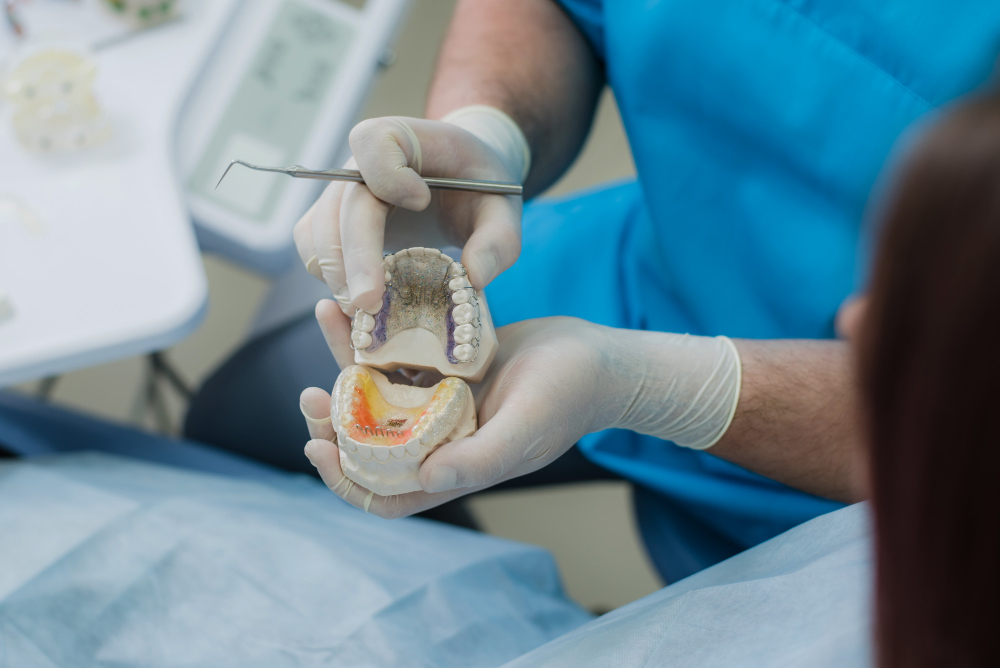
- Dr. Hardin examines your teeth and gums, takes X-rays, and captures a digital scan of both arches with no putty impressions
- Your case goes to a United States based licensed orthodontist who maps the movement sequence alongside Dr. Hardin
- We fit your first set of trays, show you how to seat and remove them, and confirm the fit is comfortable
- You scan at home with the ProMonitoring app every couple of weeks so tracking issues surface early
- We fit a clear retainer once your final tray comes out
The orthodontist review is the step that separates supervised treatment from a mail order kit. It is also why the treatment time we quote is a plan rather than a guess, and why we can tell you at the consultation whether clear aligners will finish the job.
What Happens After Your Last Tray
Teeth drift for life. That is not a flaw in aligner treatment, it is how the mouth works, and it applies equally to patients who wore metal braces in high school. The retainer we fit after your last tray is what protects the result you paid for.
Retainer wear is heavy at the start and tapers to nights only for most patients. Keeping it clean matters more in Plano than people realize, because North Texas water carries a heavy mineral load. Rinse cool rather than hot, brush gently with a soft bristled toothbrush, skip toothpaste since the abrasives scratch, and switch to filtered water if the plastic keeps clouding.
Frequently Asked Questions
Do you offer clear aligners, and is there a new patient discount?
Yes. The practice offers clear aligner treatment for teeth straightening. New patients receive $1,000 off clear aligners. The Medit i700 digital impression system is used to scan your teeth accurately without traditional impression trays. Clear aligners are removable and replaced in a series of trays that gradually shift teeth into alignment.
Will I see the same dentist at every visit?
Yes. Dr. Hardin is the only dentist at this practice. There are no associate doctors or rotating staff. Every patient, whether coming in for a cleaning, a crown, an implant consultation, or an emergency visit, is seen by Dr. Hardin directly.
What is the dental membership plan and how does it work?
The in-house membership plan is $40 per person per month. It includes two dental exams, two professional cleanings, and two sets of X-rays each year. Members also receive 15% off all other services. There is no waiting period, no deductible, and no annual maximum. Products are excluded from the discount. The plan is designed for patients without dental insurance who want predictable, affordable access to care.
Do you offer sedation for patients with dental anxiety?
Yes. Two sedation options are available, nitrous oxide and oral conscious sedation. Nitrous oxide is inhaled through a small mask during the procedure and wears off quickly, so patients can drive themselves home afterward. Oral conscious sedation involves taking a prescribed pill before the appointment for deeper relaxation. This option requires a driver. Both options are available across a range of procedures for patients who need them.
Contact Us
We have run this practice as a privately owned office since 2011, and Dr. Hardin sees every patient himself.
Visit Us: 1820 Coit Rd, Suite #145, Plano, TX 75075
Phone: (972) 964-8989
Website: westparkvillagedental.com
Office Hours:
- Monday: 8:00 am – 2:00 pm
- Tuesday: 8:00 am – 5:00 pm
- Wednesday: 8:00 am – 5:00 pm
- Thursday: 9:00 am – 6:00 pm
- Friday: 8:00 am – 2:00 pm
- Saturday: 8:00 am – 1:00 pm (2nd and 4th Saturday of the month)
- Sunday: Closed
Ready to find out how long your case would actually take? Request an appointment and we will scan your teeth and give you a plan with a real timeline attached.