
The treatments that help older adults most are the ones that restore chewing, stop decay from spreading under old dental work, and replace teeth that are already gone. For seniors in Plano, TX, that usually means crowns, bridges, dentures, dental implants and a steady cleaning schedule, chosen in that order of urgency rather than all at once. We plan treatment in phases here so cost and healing time stay manageable.
Dr. Jordan Hardin earned his DDS at the University of Nebraska College of Dentistry and holds a post doctoral fellowship in surgical implant placement through Implant Pathway’s Dental Implant Continuum, which means implant cases are planned and placed in our own office rather than referred out. For a patient in their seventies, that difference shows up as fewer appointments, fewer new faces, and one doctor who has seen the whole mouth from the start.
Why Aging Changes What Dental Treatment Needs to Do
A mouth at 70 carries a different history than a mouth at 30. Fillings placed decades ago shrink and leak at the margins. Enamel thins from a lifetime of chewing, and years of grinding flatten the biting surfaces until teeth start to chip. Gum tissue recedes and exposes root surfaces, which decay faster than enamel does because they were never built to be out in the open, and that recession is often the first visible stage of how gum disease leads to tooth loss.
Medication makes it harder still. Dry mouth is a side effect of a long list of common prescriptions, and saliva is what washes acid off teeth between meals. Less saliva means more decay, often in people who brushed carefully their whole lives and never had a cavity before sixty. We mention this because patients tend to blame themselves for new problems that are mostly chemistry. The treatment plan has to account for that, which is why we look at the whole mouth rather than fixing one tooth and sending you home.
Treatments That Save a Tooth You Still Have
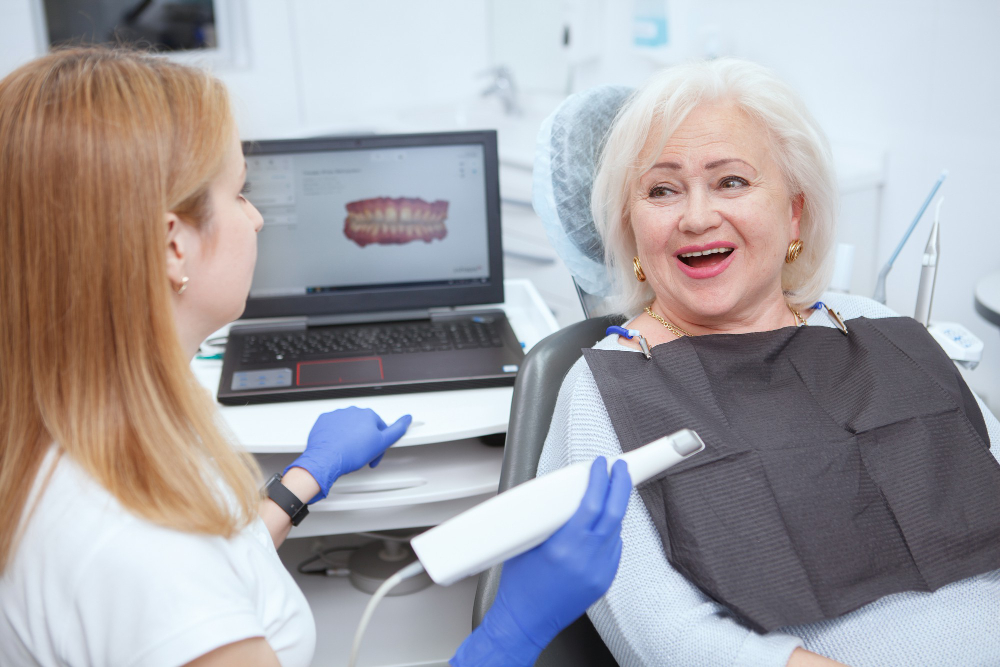
Saving a natural tooth is almost always cheaper and simpler than replacing one, so it is where we start. A dental crown covers a tooth that has cracked, worn down or lost too much structure to a large old filling, and it restores the shape well enough to chew normally again. We take digital impressions rather than filling your mouth with tray material, which most older patients appreciate more than any other change we have made.
Root canal therapy comes into play when decay or a crack reaches the nerve. It has a worse reputation than it deserves, and for a senior the alternative is usually losing the tooth and facing a replacement decision years earlier than necessary. Where several teeth have worn down together, often from decades of grinding, a staged approach through full mouth reconstruction rebuilds the bite in planned phases rather than all in one stretch. We sequence that work around your budget and your tolerance for appointments.
Replacing Teeth That Are Already Gone
Three routes exist for a missing tooth, and the right one depends on how many are gone, what the jawbone looks like underneath, and what you want to spend. Dental implants replace the root itself and sit independently of the teeth beside them. We use cone beam scanning to assess bone volume and map nerve position before surgery, so the placement is planned on a three dimensional image rather than estimated from a flat X ray.
Bridges anchor to the neighboring teeth and span the gap without surgery, which suits patients who want a fixed result on a shorter timeline. Dentures replace a full arch or several teeth at once and remain the most accessible option for extensive tooth loss. Age by itself rarely rules anything out, a point worth reading more about in our piece on why age alone does not rule out implants. Health history and bone volume decide far more than a birth year does.
Not sure which replacement fits your situation? Bring your questions and any old X rays to a consultation. Dr. Hardin will walk through the options on screen with you and quote the fee before anything is scheduled. Give us a call at (972) 964-8989, and request an appointment at our Plano office.
Choosing Between Dentures and Fixed Options
Patients ask us to compare these constantly, so here is the honest version side by side.
| Dentures | Bridges | Implants | |
|---|---|---|---|
| Surgery needed | No | No | Yes |
| Teeth replaced | Several to a full arch | One to three in a row | One to a full arch |
| Affects neighboring teeth | No | Yes, they are reshaped | No |
| Typical timeline | Weeks | Two to three visits | Several months |
Removable options need relining as the jaw changes shape over time, and that is normal rather than a sign something went wrong. Full, partial and implant supported versions all differ in how they sit and what they ask of the teeth around them. Fixed options cost more upfront and ask more of your healing capacity, but they do not come out at night and they do not shift while you eat. Neither answer is better in the abstract. It depends on your jaw, your health and your budget.
Keeping Gums Healthy So Treatment Lasts
Everything above depends on the foundation holding. Gum disease is the single biggest reason older adults lose teeth that were otherwise sound, and it progresses quietly because it rarely hurts until it is advanced. Bleeding when you brush, gums pulling away from the tooth, persistent bad breath or a tooth that feels slightly loose are the signals worth acting on.
Our hygienists Tiffaine and Abbie handle routine cleanings and gum care, and patients across Plano mention their light touch often. Twice yearly visits do two things at once. They remove the buildup a brush cannot reach below the gumline, and they give Dr. Hardin a chance to catch a failing crown or a soft spot on a root while it is still small. For a senior managing cost, that is the single highest value appointment on the calendar, and this guide to what preventive visits actually cover sets out what happens at each one.
Care should fit the life you are living now. Schedule the cleaning, ask what a crown would cost before you need one, and take the replacement decision in your own time with real numbers in front of you.
Ready to start? Call at (972) 964-8989, and book your visit with Westpark Village Dental Care and we will build the plan around what your mouth needs first.