
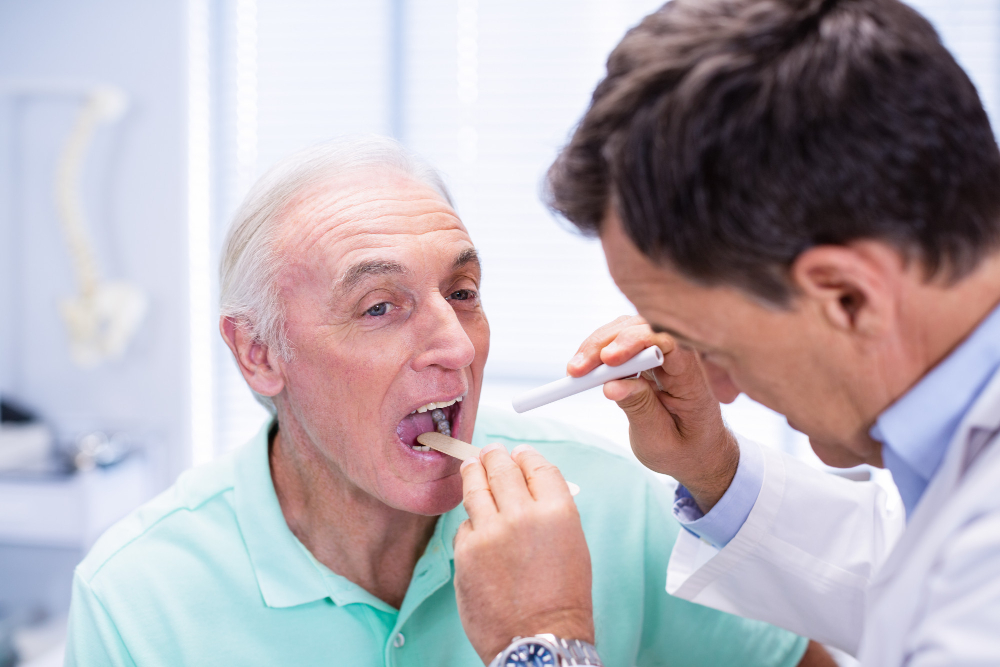
Root decay, gum recession, dry mouth, worn enamel and failing decades old dental work account for most of what we treat in patients over sixty. None of these arrive suddenly, and almost all of them are painless until they are advanced, which is the part that costs people teeth. We catch the majority of them during routine exams at our Plano practice, often years before a patient would have noticed anything.
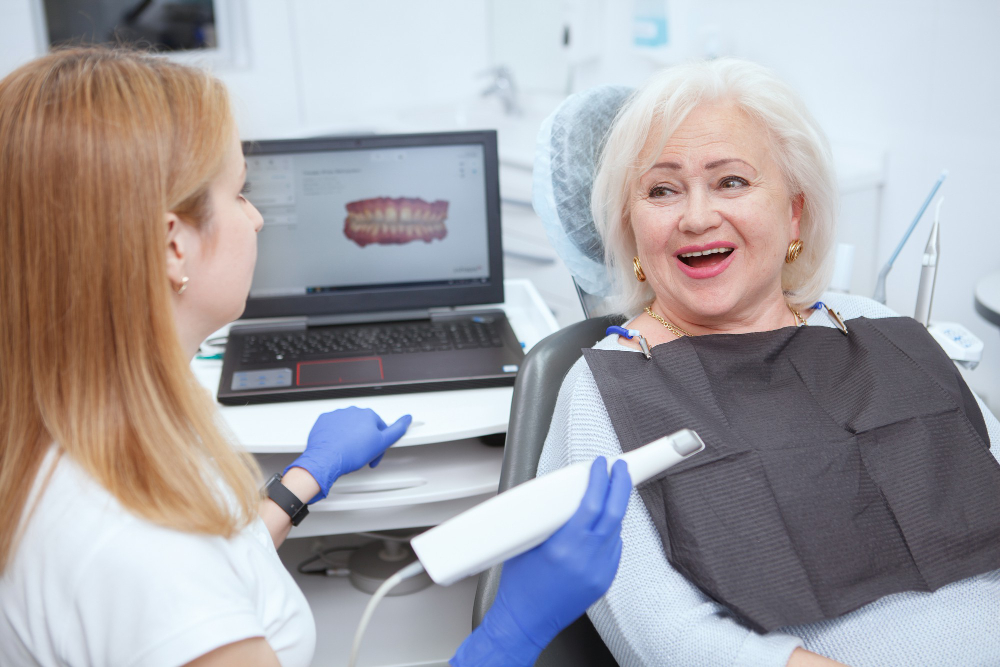
Dr. Hardin shows patients the images on screen during the exam rather than describing findings they cannot verify. For an older adult weighing whether a problem is worth treating now, seeing the actual tooth tends to settle the question faster than any explanation does. Below are the conditions we see most, what causes them, and what treatment looks like in practice.
Dry Mouth and the Decay That Follows It
Saliva does more work than people give it credit for. It rinses acid off the teeth after meals, carries minerals that repair early enamel damage, and keeps bacteria from settling into one spot. When saliva production drops, every one of those protections weakens at the same time.
Hundreds of common prescriptions list dry mouth as a side effect, including medications for blood pressure, depression, allergies, incontinence and Parkinson’s. Patients taking several at once feel it most. What we see clinically is a sudden run of cavities in someone who went forty years without one, which patients almost always interpret as a personal failure rather than a pharmacological one. Sipping water through the day, chewing sugar free gum and asking your physician whether an alternative exists all help. So does telling us what you take, because it changes how often we want to see you. What happens during those visits is covered in this overview of preventive dentistry that catches problems early.
Gum Recession and Exposed Root Surfaces
Gums pull back from the teeth gradually, through a mix of gum disease, years of firm brushing, and ordinary tissue change. The visible result is a tooth that looks longer than it used to. The clinical result matters more, because what gets exposed is root surface, and roots have no enamel on them.
Cementum, the material covering a root, is softer and decays considerably faster than enamel does. A cavity that would take years to develop on a crown surface can establish itself on an exposed root in a fraction of that time, often right at the gumline where a brush passes over it quickly. Sensitivity to cold is usually the first thing patients notice. Recession also loosens the seal around older crowns and fillings, letting decay start underneath restorations that still look perfectly fine from the outside. That is a large part of why we take X rays rather than relying on what is visible.
Noticed your teeth looking longer, or a new sensitivity to cold? Those are worth an exam rather than a wait and see. Give us a call at (972) 964-8989, and request an appointment and we will show you exactly what is happening on screen.
Old Dental Work Reaching the End of Its Life
Nothing placed in a mouth lasts forever. A filling from the 1980s has been through roughly forty years of chewing, temperature swings and flexing, and the margin where it meets the tooth opens up long before the filling itself fails. Bacteria get into that gap and work underneath, which is why recurrent decay under existing restorations is one of the most common findings in older patients.
Watch for these signs that older work is failing:
- A tooth that aches when you bite down but feels fine otherwise
- Sensitivity to sweet foods in a tooth that already has a filling
- A rough edge you can catch with your tongue or floss
- Darkening around the border of a silver filling
- A crown that feels slightly loose or clicks
Treatment depends on how much tooth is left underneath. Sometimes replacing the filling is enough. Where too little structure remains, a crown rebuilds the worn tooth so it can take a chewing load again. Where decay has reached the nerve, root canal therapy saves a tooth that would otherwise come out.
Gum Disease and Tooth Loss Later in Life
Periodontal disease is the leading reason adults lose teeth that were never badly decayed. It begins as inflammation at the gumline, progresses into the bone supporting the tooth, and gives very little pain along the way. By the time a tooth feels loose, a meaningful amount of supporting bone is already gone.
Risk climbs with age, and climbs further with diabetes, smoking and dry mouth, which puts a lot of older adults in more than one risk category at once. The early signs are bleeding during brushing, gums that look puffy or have pulled back, breath that does not improve with brushing, and any change in how your teeth fit together. Caught early, the response is usually a deeper cleaning and a tighter recall schedule rather than anything dramatic.
Missing Teeth and What They Do to the Rest of the Mouth
Losing a tooth does not stay a one tooth problem. The teeth on either side drift toward the gap, the opposing tooth drops down looking for contact, and the bite shifts in ways that put uneven load on everything else. Chewing migrates to the other side of the mouth, which accelerates wear there.
The jawbone changes too. Bone that no longer carries a tooth root gradually resorbs, and over years that affects facial support around the mouth and lips. This piece on how missing teeth change facial shape walks through what that looks like. This is the main argument for not leaving a gap indefinitely, even a back one nobody sees. Replacing it with an implant, a bridge or a partial denture holds the rest of the arch in position.
Most of what is on this list responds well to early treatment and poorly to waiting. If something on it sounds familiar, a checkup and a set of X rays will tell you where you actually stand.
Recognise any of these? Call at (972) 964-8989, and schedule your first visit with Westpark Village Dental Care and we will go through the findings with you on screen.