
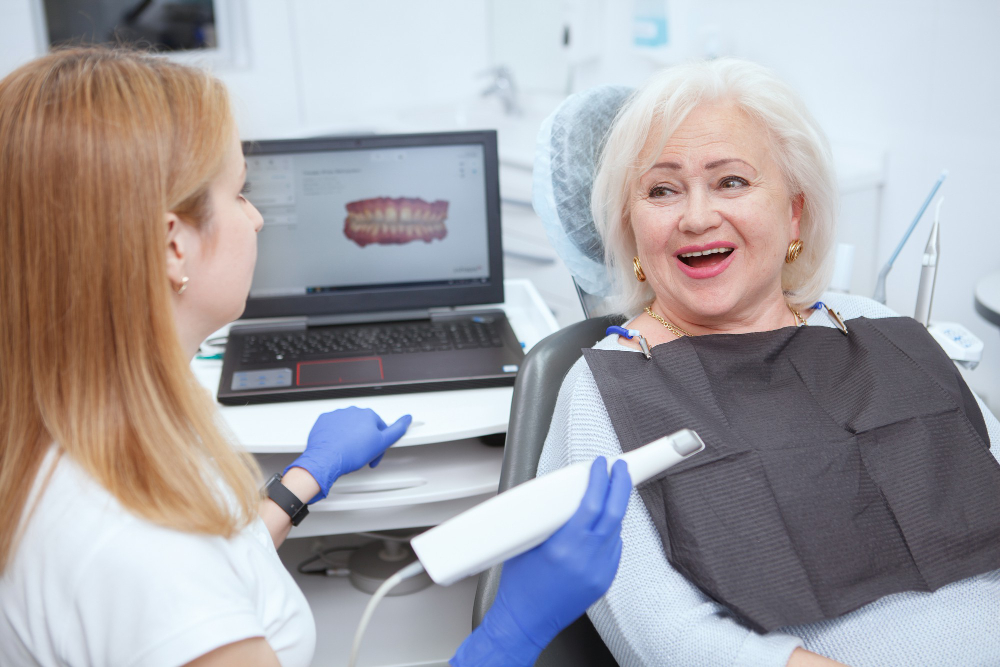
Dentures replace teeth sitting on the gums, while implants replace the tooth root itself inside the jawbone. That single structural difference drives everything else, including cost, surgery, chewing strength, bone preservation and how often the appliance needs adjusting. For most seniors in Plano, the decision comes down to bone volume, general health and budget rather than age.
We place implants in our own office, which means Dr. Hardin reviews the scan, plans the placement and performs the surgery rather than handing you to an outside oral surgeon. We also make dentures, so neither option is the one we happen to sell. What follows is the comparison we walk through with patients at the consultation.
How Each Option Actually Works
A denture rests on the gum tissue and the bony ridge underneath it. Full dentures replace an entire arch and stay in place through suction and the shape of the ridge. Partial dentures fill in around teeth you still have, usually clasping onto them for stability. Both come out for cleaning and both are made from acrylic, sometimes with a metal framework for strength, and they sit alongside bridges among the tooth replacement options we offer.
An implant is a titanium post placed surgically into the jawbone, where bone grows against it over several months in a process called osseointegration. Once it has integrated, a crown attaches on top. The post takes over the job the natural root was doing, which is transmitting chewing force down into the bone. That is the whole reason the two options behave so differently over time, and it explains most of what follows.
Comparing Cost, Timeline and Surgery
| Dentures | Implants | |
|---|---|---|
| Surgery required | No | Yes |
| Typical timeline | Several weeks | Several months |
| Upfront cost | Lower | Higher |
| Ongoing adjustments | Relining as the ridge changes | Routine cleanings only |
| Chewing strength | Reduced, harder foods limited | Close to a natural tooth |
Dentures win clearly on upfront cost and speed. Impressions, a try in and delivery can be finished in weeks, with no healing period and no surgical risk, which matters for patients managing other health conditions. Implants ask more at the start and pay it back across years, since there is nothing to reline and nothing to replace on a schedule.
Health history shapes this more than age does. Uncontrolled diabetes, smoking and certain bone medications affect how predictably an implant integrates. Dr. Hardin reviews medical history and a cone beam scan before recommending either route.
Weighing these two against each other? A consultation with a scan answers the bone question in one visit, and you leave with a fee quoted in writing. Give us a call at (972) 964-8989, and request an appointment at our Plano office.
What Happens to the Jawbone Over Time
Bone responds to load. When a tooth root is removed and nothing replaces it, the bone that supported it has no job and gradually resorbs. This happens fastest in the first year after extraction and continues slowly afterward, which is why a denture that fit beautifully at delivery feels loose three years later. The denture did not change shape. The ridge underneath it did.
Implants interrupt that process in the area immediately around the post, because chewing force travels down into the bone the way it did through a natural root. For a patient in their sixties who expects to need this replacement for another twenty or thirty years, that difference compounds. It also runs the other way. Someone who has already lost substantial ridge height may need grafting before an implant is possible, which adds time and cost and sometimes tips the decision back toward a removable option. For a closer look at how the costs play out over time, see this breakdown of whether implants are worth the investment.
Daily Life With Each Option
Dentures come out at night and get brushed separately, soaked, and handled carefully over a towel or a basin of water because acrylic cracks when dropped on a hard floor. Adhesive helps with the lower arch, which has less ridge to grip. Most people adapt to speaking within a few weeks and to eating over a longer stretch, starting with softer foods and working up. Hard and sticky items stay off the list permanently for many wearers.
Implants are brushed and flossed like the rest of your teeth, with no removal and no adhesive. Chewing strength is close enough to natural that most patients stop thinking about which side they are using. The trade off is the healing period, several months during which a temporary solution bridges the gap. The replacement cycle for removable appliances tends to surprise people planning a long horizon.
Choosing the Right One for Your Situation
Dentures usually make the most sense when several teeth are missing across an arch, when the budget needs to stay predictable, when a health condition makes surgery unappealing, or when significant bone loss has already occurred. They are the practical answer far more often than implant marketing suggests, and a well made denture is not a consolation prize.
Implants tend to be the better fit when one or a few teeth are missing, when the remaining teeth are healthy and you would rather not reshape them for a bridge, when bone volume is adequate, and when chewing performance ranks high on your list. There is a middle option too. An implant supported denture uses a small number of posts to anchor a full arch, which holds it steady without the cost of replacing every tooth individually. That combination solves the loose lower denture problem better than anything else we offer. Before you decide, it is worth knowing how long dentures typically last so the comparison covers the same stretch of time.
Bring your questions and any recent X rays to a consultation. The scan answers the bone question, the exam answers the health question, and you leave knowing what each route would actually cost in your case.
Still undecided? Call at (972) 964-8989, book an appointment with Westpark Village Dental Care and we will put both options in front of you with real numbers attached.