

Picking a dentist for your whole family is a very different decision than picking one just for yourself. You’re not only looking for someone you personally trust, you want someone your kids will feel at ease with too, a family dental clinicthat can handle a toddler’s first dental checkup and a teenager’s aligner consultation under the same roof, without you having to switch practices a few years down the road because ownership changed hands or doctors kept rotating in and out.
At Westpark Village Dental Care, we built this practice with exactly that kind of family in mind. Dr. Hardin has been the only treating dentist here since we opened in 2011, and that kind of consistency is something patients notice, and keep coming back for, year after year.
This guide walks through what to actually look for when picking a family dentist in Plano, what dental care should look like at different ages, and how to keep the whole process simple instead of turning it into one more thing you have to manage.
What “Family Dentistry” Actually Means in Practice
Not every dental office that puts “family” on its sign actually sees patients across all age groups. Some practices focus primarily on adults and accommodate children as a secondary offering. Others see young children through early grade school but refer out once orthodontic needs or more complex restorative work arises. That is not a family practice in any meaningful sense. That is just a practice that is willing to see most ages.
A practice that genuinely serves families handles the full range of needs that come up across different life stages under one roof. That means the same doctor who sees your five-year-old for a first cleaning can also manage a parent’s dental crown or a teenager’s clear aligner treatment without sending anyone elsewhere. It means one practice relationship to maintain instead of two or three, which makes scheduling far less complicated when you have multiple people to coordinate. And it means the doctor knows every member of your family, which creates a level of context that a series of one-off appointments at different offices never can.
At our office, Dr. Hardin sees patients of all ages. He handles preventive dentistry for young children, restorative and cosmetic work for adults, and the more involved care that comes up as families grow and change over time. Nothing gets handed off because a patient ages out of a certain bracket.
Finding a Family Dentist You Can Actually Stay With
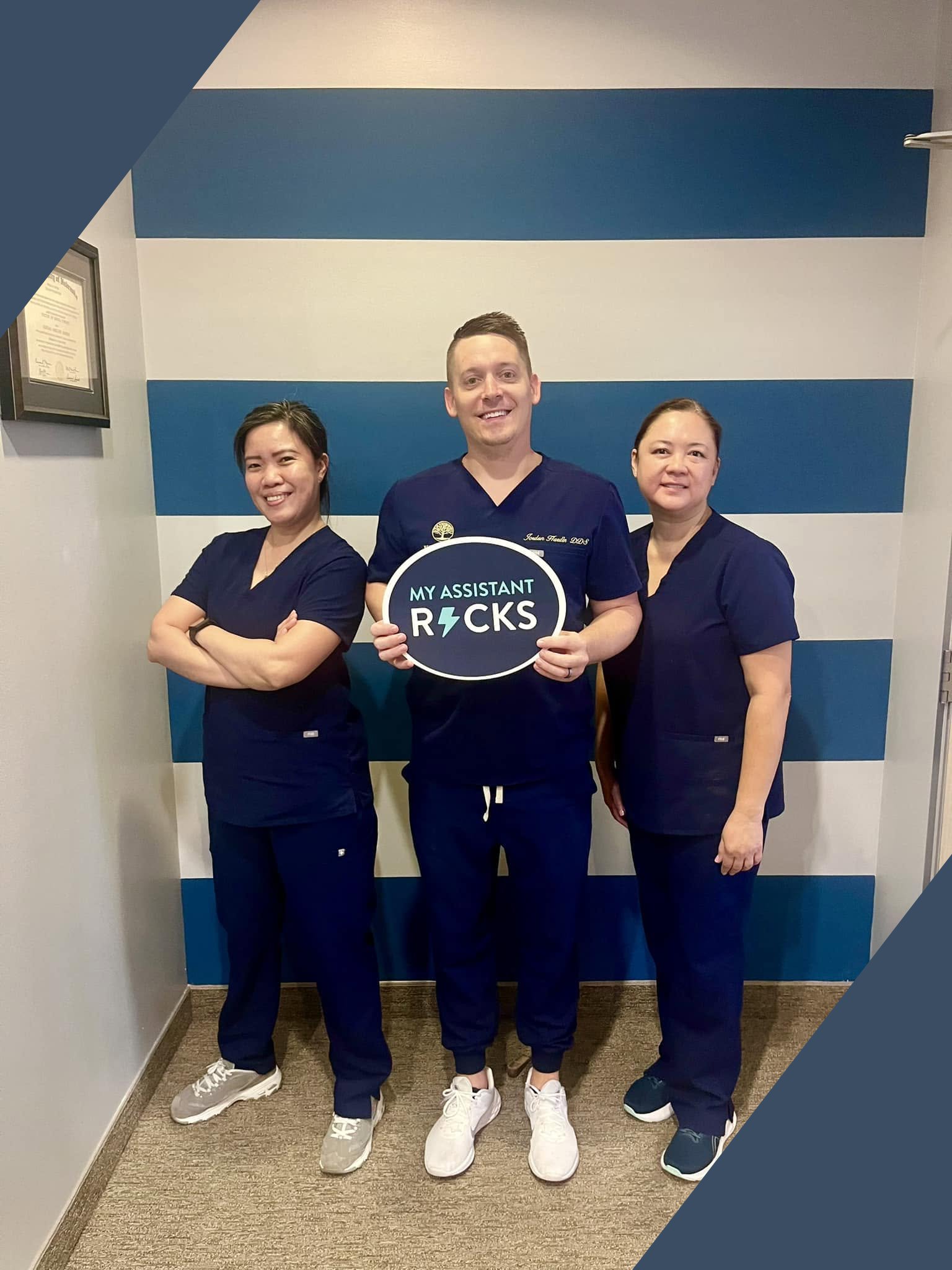
The factor many parents overlook when picking a family dentist is whether the practice is built to keep the same patients for years. A practice with high staff turnover, rotating associate doctors, or a corporate parent making staffing decisions from a regional office is not built for that kind of long-term relationship. Patients who see a different dentist at every other visit are essentially starting over each time. The new doctor has not seen the X-rays, does not know what was discussed at the last visit, and has no history to work from.
Privately owned practices work from a different model entirely. When the dentist is also the owner, the stability of the practice is their direct concern. There is no management layer between clinical decisions and the doctor who is accountable for them. The doctor who sees your child for the first time is the same one who will check their teeth a year later and the year after that. You can read more about how we operate on our about us page, but the short version is that Dr. Hardin sees every patient, every time, no exceptions.
When evaluating practices, it is worth asking directly: will the same doctor see my family at every appointment? If the answer is “usually” or “we do our best,” that tells you something real about the structure of the practice. It should be a straightforward yes.
What Dental Care Should Look Like at Different Ages
A five-year-old and a fifteen-year-old need very different things at a dental appointment, and so does a parent in their thirties or forties managing restorative work they have been putting off. At the younger end, visits are mostly about monitoring development, building good habits, and making sure each appointment ends on a positive note. We check that teeth are coming in correctly, look for early signs of decay, and make sure parents have what they need to support good brushing at home.
As children move into grade school, those checkups and cleanings stay twice a year, but we add more to each visit. Permanent teeth are coming in, and we watch closely how the bite is forming and whether any spacing concerns are developing. For a tooth that comes in with a cavity already forming, a simple filling handled early is a much smaller conversation than a root canal down the road. We also apply dental sealants and fluoride treatments in this age group to protect the back teeth where decay is most likely to start.
For adults in the family, the scope shifts again. Restorative needs come up more often. Dental crowns for damaged or weakened teeth, tooth extractions when a tooth cannot be saved, and replacement options like dental implants or dental bridges for missing teeth are all handled at our Plano office without referring out. Dr. Hardin holds a post-doctoral fellowship in surgical implant placement through Implant Pathway’s Dental Implant Continuum, which means patients coming in for implant care are working with a doctor who trained specifically for that procedure.
Managing the Cost of Dental Care for the Whole Family
Covering multiple family members at a dental practice is a real budget consideration that does not get simpler the more children you have. Insurance helps when you have it, but many families find that coverage runs short before everyone’s needs for the year are met. And for families without insurance, the math gets complicated quickly.
Our in-house savings plan is $40 per person per month, and it covers two exams, two cleanings, and two sets of X-rays each year, with 15% off any additional services. There is no waiting period, no deductible, and no annual maximum. For a family with multiple children, that structure means predictable preventive care for everyone without surprise bills. Products are excluded from the discount, but the plan covers the visits that matter most for staying ahead of problems.
For procedures that go beyond preventive care, we work with CareCredit and Cherry for third-party financing, and we also offer in-house no-interest payment plans with multiple term options. Our insurance and financing page has the full breakdown of what we accept and how the billing process works, including the fact that we file claims on your behalf so you are not dealing with that paperwork yourself.
What to Know About Making a Switch From Your Current Dentist
Switching dental practices with children involved can feel like a bigger process than it actually is. In most cases, transferring records from a previous office is straightforward. We ask for X-rays and any relevant treatment notes, review them before your first visit, and use that context so we are not starting completely from scratch. You do not need to redo recent work simply because you changed offices.
What matters most during that transition is that your new practice takes time to understand your family’s full picture before making any recommendations. At our office, first appointments with new families typically run a bit longer for exactly this reason. Dr. Hardin goes through each person’s records, does his own exam, and explains what he finds before anything gets scheduled. Nothing is added to a treatment plan without a clear explanation of why it is needed and what the options are if it waits.
Families coming from a corporate chain often tell us the difference in how that conversation feels is noticeable right away. If you want to hear what that experience has been like for other Plano patients, our reviews page gives you a real picture of what to expect. When you are ready to bring your family in, request an appointment online and we will take it from there.
Related Topics: