
Dentures need a daily brushing, a nightly soak in cleaning solution, and a rinse before they go back in. Skip any of the three and plaque builds along the gum line of the plate. That is what produces bad breath, sore gums and fungal infections. Our dental practice in Plano, TX fits and maintains full and partial dentures, and Dr. Jordan Hardin sees every patient himself at each visit. Most denture complaints we hear start with a cleaning habit rather than a fault in the plate itself. The routine below covers soaking, brushing, rinsing, storage and the checkups that keep a set comfortable for years.
Soaking Dentures in Cleansing Solution
An overnight soak breaks down the plaque film that brushing alone leaves behind. The next morning's clean then takes half the effort. Keep the plate fully submerged and follow the soak time printed on your cleaner, because a partial soak leaves the dry section untouched. Regular toothpaste has no place in this step. The abrasives in it are formulated for enamel, and on acrylic they cut microscopic grooves that then hold stain and bacteria. Soaking also gives the gum tissue underneath a break from being covered, which matters more than most patients expect.
Brushing Dentures Gently
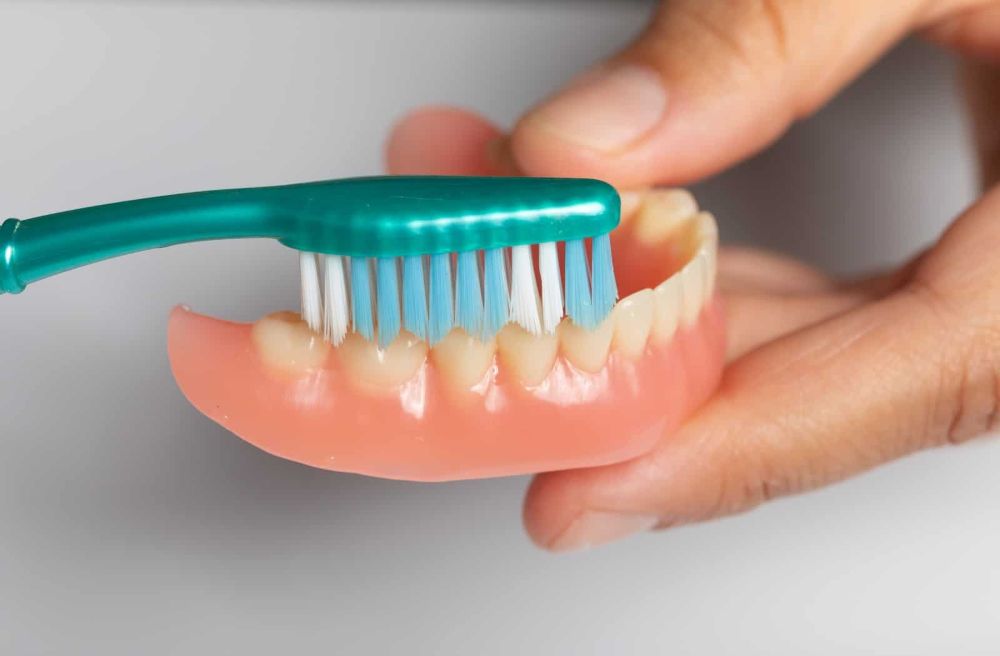
Brushing daily keeps the plate clean between soaks, and the technique matters more than the product. What your dentures are made from changes how much pressure they tolerate. It helps to know whether you are handling acrylic, porcelain or a flexible polymer. Our guide to denture materials covers how each one behaves. Work over a folded towel or a basin of water so a slip does not end in a crack.
Use a soft-bristled denture brush. The wider head and softer filaments clean the plate without scoring it.
Stick to mild soap or a denture-specific paste. Household cleaners and whitening toothpastes are too aggressive for the acrylic.
Cover every surface, including the tissue side and the grooves along the gum line where debris collects.
Rinse off all soap or cleaner before the plate goes back in.
Rinsing Dentures Thoroughly
Hold the denture under running water after brushing and run a finger over each surface to catch anything still clinging on. Residual cleaning solution is the part patients tend to underestimate. Denture cleansers contain persulfates. Traces left on the plate can produce burning, tissue irritation or swelling once it is back against the gums. The grooves and the inner curve hold the most residue, so give those the extra few seconds. A thorough rinse costs about a minute and prevents the soreness that sends people back to the office.
Cleaning Denture Storage Container
The case needs the same attention as the plate, because a clean denture stored in a dirty container is recontaminated overnight. Wash it daily in warm water and mild soap, using a separate soft brush from the one you use on your dentures. Rinse the soap out completely, then let the case air dry with the lid open before the next use. A case that stays damp and closed grows the same bacteria and yeast you just removed. Replace it every few months, or sooner if the plastic develops a film that will not wash off.
Avoiding Hot Water for Dentures
Hot water warps denture acrylic, and a warped plate never seats correctly again. The distortion is usually slight enough to miss at the sink. Patients then spend weeks wondering why the fit went wrong. Boiling water, a dishwasher cycle and a hot car all do the same damage. Use cool or lukewarm water for every rinse and soak. Heat exposure also breaks the acrylic down over time and shifts its color. A set that has been through it looks older than its age.
If your dentures have started to rock, rub or click, the fit has changed and no cleaning routine will correct it. We repair, reline and replace full and partial dentures at our Plano office. Call (972) 964-8989 and we will get you in for an adjustment.
Regular Dental Check-Ups for Dentures
Home care keeps a denture clean, but it cannot keep it fitting. The jawbone under a denture continues to resorb after teeth are removed. A plate that seated perfectly two years ago gradually stops matching the ridge beneath it. At a checkup we assess the fit against the current shape of the ridge. We examine the soft tissue for sore spots and signs of fungal infection. When the fit has drifted, we reline or adjust the plate. We also screen the gums and remaining teeth, since denture wearers still need oral cancer screening and periodontal care. Maintenance is one of the larger factors in how long a set of dentures lasts, alongside the material itself.
Denture Care and Adjustments in Plano, TX
A denture that is cleaned well and checked yearly stays comfortable far longer than one that is only cleaned well. Dr. Hardin sees every patient personally rather than rotating cases between associates. Request an appointment for a denture checkup and we will tell you honestly whether yours needs an adjustment, a reline or nothing at all.
Frequently Asked Questions
A few questions come up at almost every denture appointment, so here are the short answers.
Can I use regular toothpaste on my dentures?
No. Standard toothpaste contains abrasives sized for tooth enamel, and denture acrylic is considerably softer. Brushing with it leaves fine scratches that trap stain and bacteria, so the plate discolors faster and becomes harder to keep clean. Use a denture-specific paste or a mild soap instead, applied with a soft denture brush.
Should dentures be left out overnight?
Yes, for most patients. Leaving them out gives the gum tissue several uninterrupted hours to recover. That lowers the risk of denture stomatitis. Store them submerged in water or cleaning solution so the acrylic does not dry out and change shape. If your dentist has told you to wear yours overnight, follow that instruction instead.
How often should a denture wearer see the dentist?
Once a year at minimum, and sooner if anything changes. Sore spots, slipping, clicking or a plate that feels suddenly loose all point to a fit problem. Left alone, it gets worse. Yearly visits also cover the oral cancer screening and gum assessment that denture wearers still need.