
With more than 161,000 dentist members across the country, the American Dental Association stands as the largest professional dental organization in the United States. Its recommendations are shaped by clinical experts and revised as new research comes in, giving patients and practices a trusted reference point for reliable dental care. The guidance covers both preventive habits and restorative procedures, forming the baseline for what quality care should look like at any practice.
Knowing what the ADA recommends, and the reasoning behind it, gives patients a clearer sense of what to expect during a visit and which questions are worth asking their dentist.
What the ADA Recommends for Routine Preventive Care
The ADA recommends that patients receive professional dental cleanings and examinations at regular intervals, with the frequency determined by the individual patient’s oral health needs. For most adults and children with healthy mouths, this means twice a year.
Patients with a higher risk of dental problems, including those with gum disease, dry mouth, diabetes, or a history of frequent cavities, may need visits every three to four months. The ADA position is that the right interval is determined by clinical assessment, not a fixed rule applied to everyone.
At our Plano office, Dr. Jordan Hardin sets each patient’s schedule based on their actual oral health, following the same evidence-based approach the ADA promotes.
ADA Recommendations on Dental X-Rays
The ADA has published guidelines on the appropriate use of dental X-rays. The guidelines specify that X-rays should be taken based on individual patient need, rather than on a fixed schedule for everyone. Factors include the patient’s age, dental history, risk for decay and gum disease, and how long it has been since the last full series.
For low-risk adult patients, bitewing X-rays every 24 to 36 months may be appropriate. For patients with active disease or higher risk, more frequent imaging is recommended. New patients typically receive a full-mouth series to establish a complete baseline.
Our digital X-ray system produces high-resolution images in seconds. Dr. Hardin reviews them with you during the appointment, so you can see what we see and ask questions in real time.
ADA Guidelines on Fluoride
The ADA supports the use of fluoride as a tool in cavity prevention for both children and adults. Professional fluoride treatments are a routine part of preventive dental visits for many patients. The ADA also recommends fluoride toothpaste for daily home care for everyone over the age of two.
Fluoride strengthens tooth enamel and helps reverse early-stage decay before it progresses to a cavity. For children, professional fluoride application is especially valuable during the years when adult teeth are developing.
ADA Recommendations for Children’s Dental Care
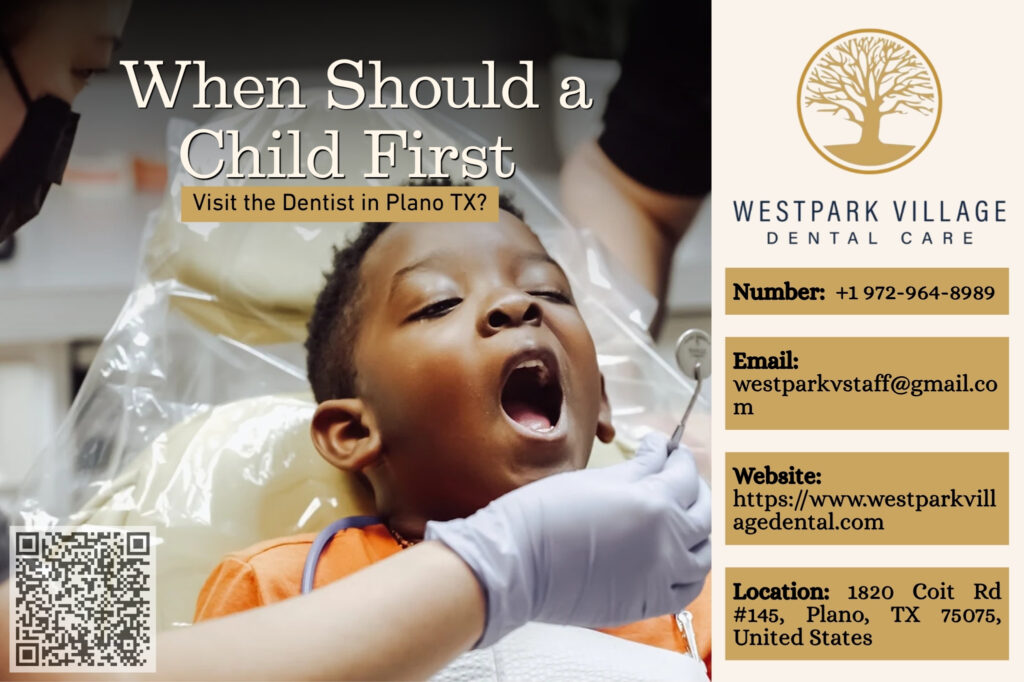
The ADA recommends that children receive their first dental visit by their first birthday, or within six months of the first tooth appearing, whichever comes first. This is earlier than many parents expect.
Early visits establish a baseline, monitor tooth and jaw development, and help children become comfortable with the dental environment before any treatment is needed. The ADA also recommends sealants for children’s back teeth as a preventive measure against decay in the deep grooves where food and bacteria tend to collect.
At our Plano office, we welcome children as part of our full-family approach. Families can bring both adults and children to one office, handled by the same doctor at every visit.
ADA Standards on Gum Disease Diagnosis and Treatment
Gum disease, also called periodontal disease, is one of the most common dental conditions in adults, and the ADA has clear guidance on how it should be diagnosed and treated. A proper periodontal evaluation includes measuring the depth of the pockets around each tooth, assessing bone levels from X-rays, and examining gum tissue for signs of inflammation.
For patients with mild gum disease (gingivitis), improved home care and more frequent professional cleanings are the typical first step. For those with more advanced disease (periodontitis), scaling and root planing is the ADA-supported non-surgical treatment.
We assess periodontal health at every exam. When gum disease is present, we explain what we are seeing, walk through the treatment options, and recommend the approach that makes clinical sense for the individual patient.
ADA Guidelines on Restorative Care
The ADA maintains guidelines on restorative treatments including fillings, crowns, dental implants, and root canal therapy. For tooth-colored (composite) fillings, the ADA supports their use as an appropriate option for most teeth. For crowns, the standard indication is a tooth that is too damaged or weakened to be restored with a filling alone.
Dental implants, which replace missing tooth roots with titanium posts anchored into the jawbone, are supported by the ADA as an effective long-term tooth replacement option when there is adequate bone volume and the patient is in good general health.
Dr. Hardin is a Fellow in Implant Dentistry through Implant Pathway’s Dental Implant Continuum. He places and restores dental implants in-house at our Plano office, following the clinical standards the ADA and the implant specialty community have established.
How We Apply ADA Guidelines at Our Plano Office
Active ADA membership is part of how Dr. Hardin stays connected to updated clinical standards. ADA membership requires ongoing continuing education, which he completes every year beyond the minimum Texas state requirement.
We apply ADA-recommended protocols at every type of appointment, from routine cleanings to complex restorative work. We also follow ADA guidelines on transparent fee disclosure, meaning costs are discussed and agreed upon before any treatment begins.
We are located at 1820 Coit Rd, Suite #145, Plano, TX 75075. Call us at (972) 964-8989 or request an appointment online.
Our other dental services include:
- Dental cleanings
- Dental crowns
- Dental bridges
- Dental implants
- Teeth whitening
- Root canal therapy
- Full mouth reconstruction
Related Topics: