

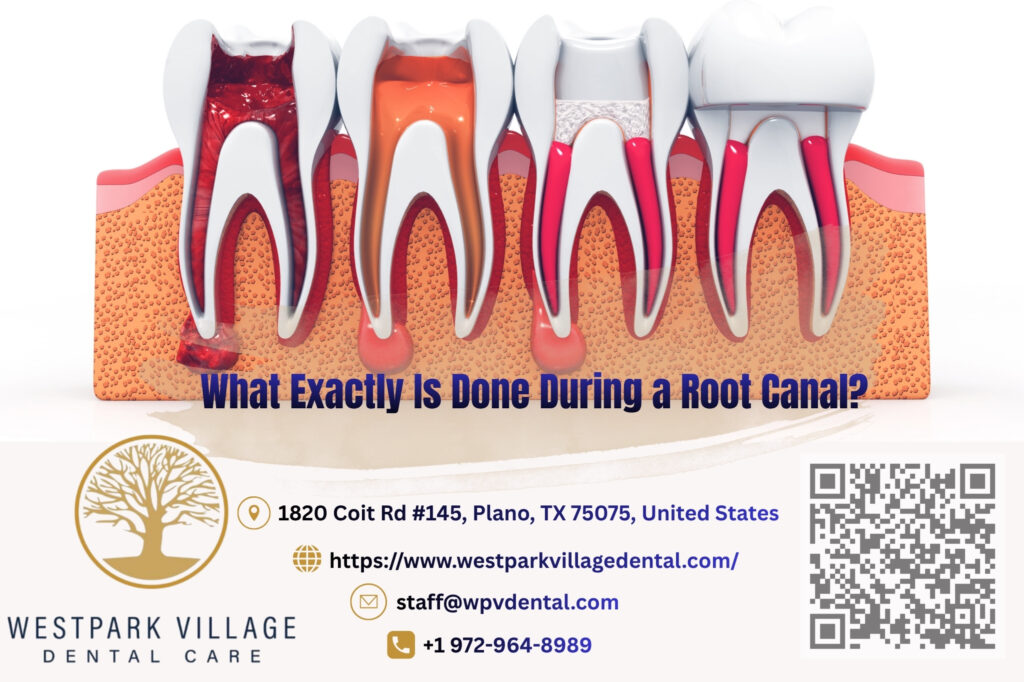
A root canal procedure involves removing infected dental pulp from the tooth’s interior chamber while preserving the outer tooth structure. Endodontists perform this treatment when bacteria infiltrate the tooth’s nerve tissue through cracks or deep decay. The procedure typically requires 1 to 3 visits,, depending on infection severity and the tooth’s complexity. Many people wonder what actually happens during those dental chair hours, and honestly, the process is more straightforward than most patients expect at Plano’s quality dental clinic. While the thought of root canal treatment can feel overwhelming, understanding each step helps reduce anxiety about this common dental procedure.
Step 1: Numbing and Creating Access
The dentist starts by administering a local anesthetic around the affected tooth, ensuring complete numbness in the surrounding gum tissue and jawbone. Once the area feels completely numb (usually takes about 10-15 minutes), a small access hole gets drilled through the crown of the tooth.
This opening provides direct access to the pulp chamber where the infected nerve tissue lives. A rubber dam is often placed around the tooth to keep the treatment area clean and prevent any debris from falling into your mouth during the procedure. The entire setup creates a sterile working environment, which is crucial for preventing reinfection.
Step 2: Removing the Infected Pulp
Here’s where the real work happens. Using specialized endodontic files, the dentist carefully removes all the infected pulp, nerve tissue, and blood vessels from both the main pulp chamber and the root canals. Think of it like cleaning out the inside of a straw, except these “straws” are incredibly tiny and curved.
The root canals get thoroughly cleaned and shaped with progressively larger files to remove every trace of bacteria and debris. Between each file size, the canals get flushed with antimicrobial solutions that kill any remaining bacteria hiding in microscopic spaces. This cleaning process might take 30-60 minutes, depending on how many roots your tooth has.
Step 3: Filling and Sealing the Canals
After the canals are completely clean and dry, they need to be filled to prevent future bacterial invasion. The dentist fills each canal with gutta-percha, a rubber-like biocompatible material that expands slightly to create an airtight seal. A special sealer paste gets applied alongside the gutta-percha to eliminate any tiny gaps.
The access hole in the crown is then sealed with either a temporary or a permanent filling material. For teeth with extensive damage, a temporary filling is usually placed first while a crown is fabricated in a dental lab.
Final Restoration: Protecting Your Investment
Most teeth that need root canals have already lost significant structure due to decay or fractures. That’s why dental crowns often become necessary after root canal treatment. The crown acts as a protective cap, restoring the tooth’s strength and preventing future fractures.
Some teeth with minimal damage can function fine with just a permanent filling, but your dentist will assess each case individually. The restoration choice depends on factors like remaining tooth structure, bite forces in that area, and your overall oral health.
Recovery and Aftercare Expectations
Post-treatment discomfort usually stays manageable with over-the-counter pain relievers. Many patients report that the relief from eliminating the infection outweighs any temporary soreness from the procedure itself. Avoiding hard foods for the first few days helps prevent complications.
Regular dental checkups become even more important after root canal treatment. While the tooth no longer has living nerve tissue, it can still develop problems, such as new decay around the crown margins or issues with the root structure. Most root canal treatments last for decades when properly maintained through good oral hygiene and routine dental care.
Patient reviews consistently show that modern root canal procedures cause much less discomfort than people expect. Advanced anesthetic techniques and improved equipment have transformed what used to be a dreaded dental experience into a routine treatment that effectively saves natural teeth.
Contact Us
We’re here to help you achieve a healthy, confident smile. Whether you’re scheduling your first visit or have questions about our services, our friendly team is here to assist you.
Our Office: 1820 Coit Rd #145, Plano, TX 75075
Call Us: (972) 964-8989
Email Us: westparkvstaff@gmail.com
Office Hours
- Monday: 8:00 am – 5:00 pm
- Tuesday: 8:00 am – 2:00 pm
- Wednesday: 8:00 am – 5:00 pm
- Thursday: 9:00 am – 6:00 pm
- Friday: Closed
- Saturday: 8:00 am – 1:00 pm (2nd and 4th Saturday of the month)
- Sunday: Closed
Schedule your appointment easily through our online booking system.
Resources:
Related Topics: