Westpark Village Dental Care Blog

Emergency Dental Care in Plano TX: What to Do & Where to Go

July 5, 2026

A dental emergency never waits for a good time. Pain flares up at midnight. A crown falls off the morning of a big trip. A tooth cracks right in the middle of a meal, without a single warning. For most people, that first moment of shock comes with a wave of confusion, unsure whether to call their dentist, search for a patient-centered dental clinic nearby, or just wait and hope things settle on their own. Knowing you have a dedicated dentistry team ready to step in during those moments changes everything. 


This guide covers exactly what to do when a dental emergency happens in Plano, TX, where to go, and what to expect when you call our office.


Recognizing a True Dental Emergency

Before anything else, it helps to know whether your situation genuinely warrants urgent care or whether it can wait for a standard appointment.


Situations that need same-day attention include severe tooth pain that doesn’t let up, a knocked-out or broken tooth, a lost crown, visible swelling in the jaw or face, a dental abscess, or any mouth injury involving significant bleeding or trauma. If you’re unsure whether your situation qualifies, calling a dental office directly and describing your symptoms is the fastest way to find out. A short conversation is usually enough to triage accurately.


What to Do While You Wait

Once you’ve called and confirmed a same-day appointment, there are practical steps that can make the wait more manageable.


For pain, over-the-counter medication taken as directed is appropriate. Avoid placing aspirin directly against the gum or tooth tissue, as this can irritate the area rather than help it. A cold compress applied to the outside of the jaw can reduce swelling and provide some relief.


With a knocked-out tooth, handle it by the crown and rinse it gently with water. Place it back in the socket if you’re able to, or keep it submerged in milk until you arrive at the office. Getting in within 30 minutes gives the tooth its best chance of being reattached.


A lost crown is a different situation. Avoid eating on that side of your mouth and try to locate the crown so you can bring it with you. Don’t attempt to cement it back yourself if the tooth underneath is already causing pain.


Why the Emergency Room Isn’t the Right Answer for Most Dental Problems
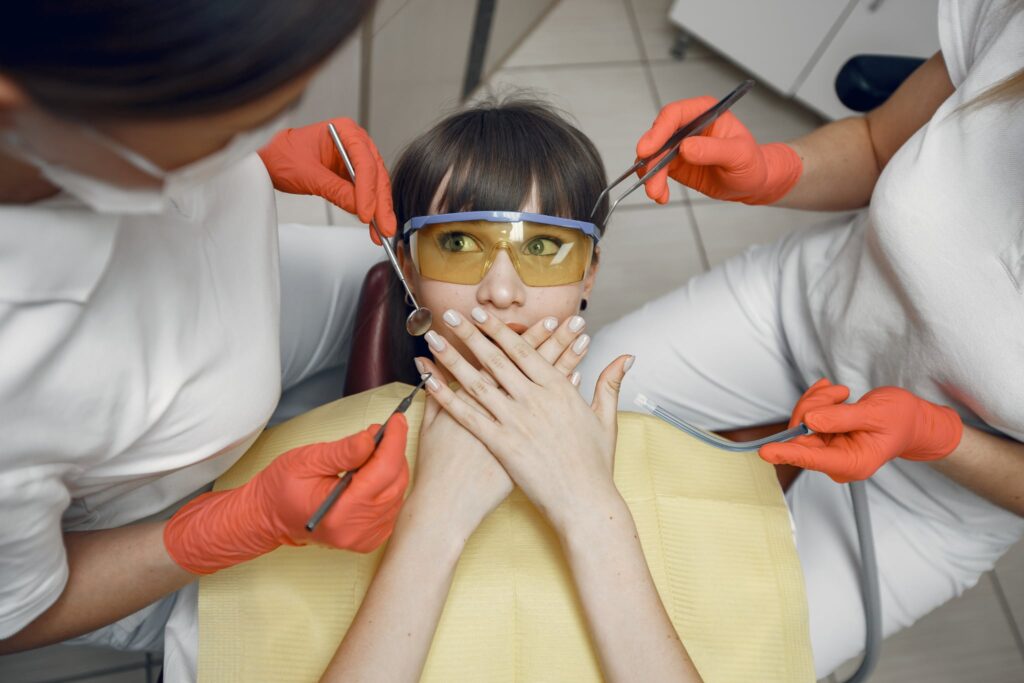
Many people head to a hospital emergency room during a dental emergency, particularly when it happens outside of business hours. This makes sense as a first instinct, but emergency rooms are not equipped to resolve dental problems.


An ER can prescribe antibiotics and pain medication, but it cannot extract a tooth, perform a root canal, replace a crown, or treat an abscess at its source. What the ER provides is temporary relief, not a solution. The dental problem remains until you’re seen by a dentist, and going to the ER often adds hours of waiting to that process without fixing anything.

A dental office that offers genuine same-day emergency care is almost always the faster and more effective path.


What Happens When You Call Our Office

When you call us about a dental emergency, you won’t be placed on hold and offered the first opening three weeks out. We assess the situation when you call and schedule emergency patients the same day.


Our team will ask you to describe your symptoms clearly so we can understand what you’re dealing with and prepare for your appointment. When you arrive, Dr. Hardin conducts a clinical exam of the affected area, takes digital X-rays to see what’s happening below the surface, and explains his findings before any treatment is recommended. Nothing is done without a clear explanation first.


Emergency Services We Provide

Our same-day emergency dental care covers the full range of urgent dental situations. That includes severe tooth pain, broken and cracked teeth, knocked-out teeth, lost crowns, abscesses, tooth extractions, and root canal therapy when it’s needed.


For patients who experience anxiety during dental procedures, both nitrous oxide and oral conscious sedation are available. You do not have to get through an emergency procedure without support if that’s a concern.


If you’re uninsured or have limited coverage, our in-house membership plan is $36 per month per person and provides preventive care plus 15% off other services, with no waiting period and no deductible. CareCredit, Cherry, and Lending Club financing are available for treatment costs that need to be spread over time.


Related Topics:
Cost of Emergency Dental Visits in Plano TX

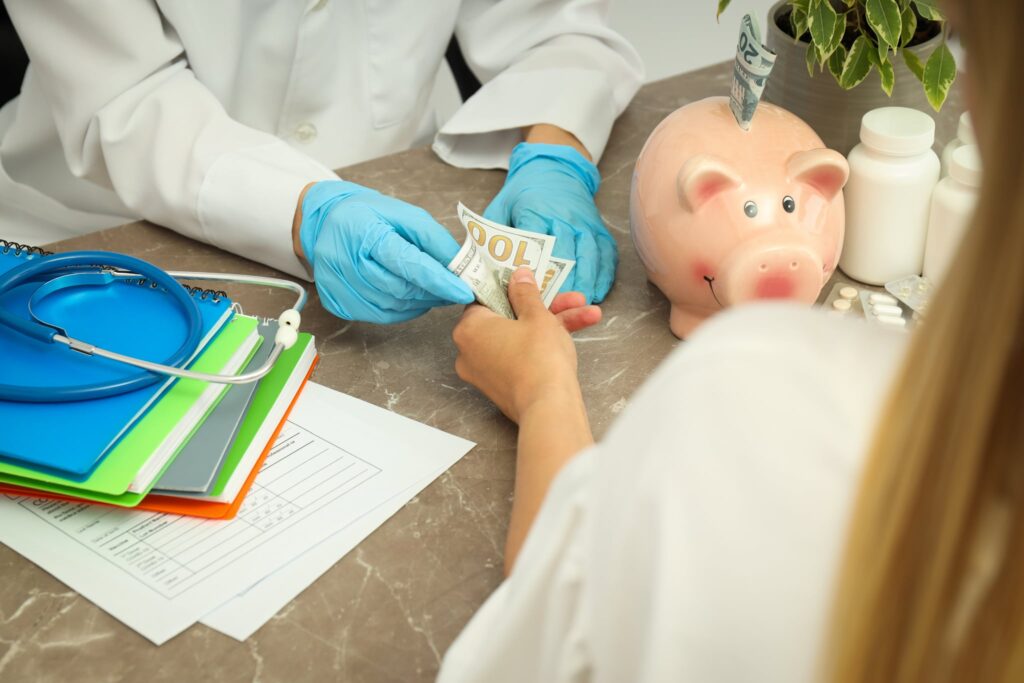
Finding an affordable dental clinic with a responsive dentist can change everything when a dental problem strikes unexpectedly. Cost is one of the biggest reasons people put off care, and that hesitation gets expensive fast. A minor infection left too long often turns into something far more complicated and costly.

Knowing what emergency visits typically run, how insurance fits in, and what options exist for the uninsured makes it easier to act quickly when it counts. 


What Goes Into the Cost of an Emergency Visit

Emergency dental costs vary depending on what the visit requires, and no two emergency situations are identical.


The exam and any X-rays taken on arrival are part of every emergency appointment. What drives the total cost from there is whatever treatment is performed that day. A lost crown that can be re-cemented or replaced is a different cost situation from a broken tooth that requires extraction and a discussion about replacement options. An abscess being managed while a root canal is scheduled carries a different cost than one that needs same-day drainage and immediate follow-up care.


We walk through costs clearly with every patient before any treatment begins. You’ll know what the recommended work involves and what it will cost before you agree to anything.


Does Insurance Cover Emergency Dental Care?

Most dental insurance plans do cover emergency dental visits, though the specifics depend on the type of plan and what treatment is needed.


PPO plans are the most flexible option. They typically cover a portion of the exam, X-rays, and emergency treatment, with higher reimbursements for in-network providers. We accept most PPO and DPO plans at our practice, and we file claims on your behalf so you don’t have to handle the paperwork yourself. If you’re not sure what your plan covers, our team can help you look it up before your appointment.


What to Do If You Don’t Have Dental Insurance

Not having insurance doesn’t mean you’re stuck absorbing the full cost without any options.


Our in-house membership plan is $36 per month per person. It covers two dental exams, two professional cleanings, and two sets of X-rays per year, plus 15% off all other services, including emergency treatment. There is no waiting period, no deductible, and no annual maximum. It is not insurance, but for patients without coverage, it provides real, immediate access to care from the moment you sign up.


If you’re calling about an emergency and don’t currently have coverage, signing up for the membership plan before your appointment is worth discussing with our team.


Financing Options for Larger Emergency Treatment Costs

Some emergency situations require treatment that goes beyond what someone can reasonably pay in a single visit. A root canal, an extraction followed by an implant consultation, or restorative work that starts with an emergency visit can involve costs that many patients need to spread out over time.


We work with three financing partners: CareCredit, Cherry, and Lending Club. All three are available at our practice for any treatment, including emergency procedures. In-house no-interest payment plans with multiple term lengths are also available for patients who prefer to work directly with us rather than a third-party lender.

Our patient financing page has more detail on each option and how to get started.


How We Approach Costs With Our Patients

We believe every patient deserves a clear financial picture before any dental work begins. Dr. Hardin explains what he finds during the exam, what the recommended treatment involves, and what it will cost before you commit to anything. If a procedure can safely wait and gives you time to plan financially, he’ll tell you that too.


No patient leaves our practice confused about what they were charged or why. That standard of clear communication applies to billing as much as it does to clinical care.


Related Topics:

Root Canal Procedure Explained Step-by-Step

The reputation surrounding root canal treatment has never quite caught up with how the procedure is actually performed today. Ask anyone at a recommended dental clinic and you’ll hear the same reassurance: what most people fear is a version of dentistry that no longer exists. That fear was shaped over decades, tied to cruder tools and rougher techniques. The stories are not fabrications. They are simply outdated. 

Today, a root canal is a precise procedure designed to relieve pain, not cause it. Here is exactly what happens at each stage, so you know what to expect if one is recommended for you.


Why a Root Canal Becomes Necessary

A root canal is needed when the soft tissue inside the tooth, known as the pulp, becomes infected or severely damaged. The pulp contains nerves and blood vessels that run from the crown of the tooth down through its roots. When decay goes deep enough, when a crack reaches the inner structure of the tooth, or when an injury affects the tooth internally, that tissue can become infected or begin to die.


Left without treatment, an infected pulp does not heal on its own. The infection spreads into the surrounding bone and tissue, the tooth eventually fails, and the infection can travel well beyond the tooth itself. A root canal removes the damaged tissue, cleans and seals the inside of the tooth, and allows the tooth to stay in place and function normally for years to come.


Diagnosis and Imaging

Before any treatment begins, Dr. Hardin takes X-rays to evaluate the extent of the infection or damage and confirm that a root canal is the right course of action. The digital X-ray system at our practice produces less radiation than traditional film and displays results immediately on screen, which means Dr. Hardin can walk you through exactly what he’s seeing in real time.


In some cases, a CT scan from our cone beam scanner is used to get additional three-dimensional detail, particularly with teeth that have more complex root anatomy. Once the imaging is reviewed and the plan is clear, Dr. Hardin explains the full procedure before anything is done.


Making Sure You’re Comfortable

The most common fear patients bring to a root canal appointment is pain. That’s worth addressing directly. The tooth and surrounding tissue are numbed thoroughly before any work begins. Most patients report feeling nothing more than the initial injection and some mild pressure during the procedure.

For patients who experience significant dental anxiety, nitrous oxide and oral conscious sedation are both available at our practice. These aren’t reserved for complex surgical procedures. If you need additional support to get through a root canal comfortably, we provide it, and that conversation should happen when you call to schedule.


Removing the Infected Tissue

Once the area is fully numb, a small rubber dam is placed around the tooth to keep the field clean and dry during the procedure. A small access opening is then made in the top of the tooth.


Through that opening, Dr. Hardin uses specialized instruments to remove the infected or damaged pulp tissue from the pulp chamber and the canals that run through the tooth’s roots. The canals are then shaped and prepared for the sealing material that comes next. This step is the core of what a root canal involves.


Cleaning, Disinfecting, and Sealing

With the pulp removed, the inside of the tooth and the root canals are cleaned and disinfected thoroughly. Antimicrobial solution flushes the canals before they’re dried and ready to be filled.


The cleaned canals are then filled with a biocompatible material called gutta-percha, which seals the space and prevents bacteria from re-entering. The access opening in the tooth is closed with a temporary or permanent filling depending on what comes next in the treatment plan.


Placing a Crown

In most cases, a tooth that has had a root canal needs a dental crown placed afterward. Teeth with significant decay or structural damage are more vulnerable to fracture following the procedure, and a crown provides the support that allows the tooth to function normally long-term.

We use the Medit i700 digital impression system to plan the fit of each crown, which means no traditional impression trays. The digital scan is faster, more accurate, and far more comfortable for patients who find traditional impressions difficult.


What Recovery Looks Like

Most patients return to their normal routine the same day or the day after the procedure. Some soreness in the area is common for a few days as the surrounding tissue heals. Over-the-counter pain relief is usually all that’s needed.


Dr. Hardin gives clear post-procedure instructions before you leave, including what normal healing looks like and what would be worth a follow-up call. If anything feels off after the appointment, reaching our team directly is straightforward.


For Patients With Dental Anxiety

A significant portion of patients who come to us for root canal therapy have been putting it off for a long time because of anxiety. We see this regularly, and there is nothing unusual about it. Both sedation options are available for root canal procedures at our Plano office.


Related Topics:

Same-Day Dental Appointments in Plano: What to Expect

There’s a big difference between booking a routine cleaning weeks out and needing a dentist today. A tooth breaks. Pain that felt manageable overnight crosses a line. A crown comes off and eating becomes a problem. That’s exactly where a same-day dental clinic in Plano, TX matters, and why patients in that situation turn to highly-rated dental professionals who can actually get them in. The real question is whether a practice can follow through on that, and what the appointment looks like once you’re there. 


At Westpark Village Dental Care, same-day availability is a real part of how we operate.


Who Same-Day Appointments Are For

Same-day dental appointments exist for situations that genuinely can’t be put off. Acute tooth pain affecting your ability to eat, sleep, or function. A broken tooth with exposed inner structure or sharp edges. A lost crown leaving a tooth unprotected. A dental abscess or visible jaw swelling. A knocked-out tooth where every passing minute affects whether it can be saved.


New patients are also welcome to call about urgent situations. Not everyone has an established dentist in the area yet, especially people who have recently moved to Plano or the surrounding DFW area. If you’re dealing with something urgent and we’re the first number you find, that’s a fine place to start.


What Happens When You Call

The first step is a phone call, not a form submission. Describe your symptoms clearly: what hurts, how long it’s been going on, whether it’s getting worse, and whether there’s visible swelling or damage. That information helps us assess urgency and prepare for your arrival.


Our team handles emergency situations the same day when the situation calls for it. You won’t be transferred to a voicemail box or offered an opening weeks out because the schedule is full. Urgent situations get worked in.


Before you come in, we’ll also talk through insurance or payment options so you’re not sitting in the chair wondering what things are going to cost. That conversation happens on the phone, not after treatment is already underway.


What to Bring

Bring your insurance card if you have one. Recent records or X-rays from another dental office are helpful but not required. Dr. Hardin takes his own digital X-rays at every new patient visit and every same-day emergency exam.


If you take any medications that affect your mouth or your ability to heal, such as blood thinners or certain cardiovascular medications, mention them when you call. That information helps us plan the appointment correctly.


What Happens at the Appointment

When you arrive, Dr. Hardin will examine the area causing the problem and take digital X-rays to assess what’s happening below the surface. In many cases, intraoral camera imaging is also used, which means you can see exactly what Dr. Hardin sees on screen in real time. There’s no guessing about why something is being recommended.


After the exam, Dr. Hardin walks you through his findings, explains what the treatment options are, and describes what each one involves before any work is approved. If treatment can be completed the same day, it typically is. If the situation requires a follow-up, you’ll leave with a specific plan and a scheduled appointment time, not a vague promise to call you back.


Patients at our practice are not handed a treatment plan without a clear explanation of what’s in it. Every recommended procedure is described in plain terms first.


Sedation for Patients Who Need It

Not every patient who calls about a dental emergency is calm about the prospect of sitting in a dental chair. Many people who reach out about urgent care haven’t been to a dentist in years, and the emergency is what finally forced the issue. That anxiety doesn’t disappear just because the pain is worse.


Both nitrous oxide and oral conscious sedation are available at our practice for patients who need them. Nitrous oxide takes effect quickly, wears off fast enough that patients can drive themselves home, and is available for same-day procedures. Oral conscious sedation involves taking a prescribed pill before your appointment for deeper relaxation and requires someone to drive you. If this is a concern for you, mention it when you call so we can plan accordingly.


After Your Appointment

Most same-day appointments end with a clear resolution. Either the issue is addressed that day, or you leave with a specific treatment plan and a scheduled follow-up. Post-procedure instructions are reviewed before you go so you know what normal healing looks like and what would be worth a call back.


If you have questions after the appointment, you can reach our team directly.


Related Topics:

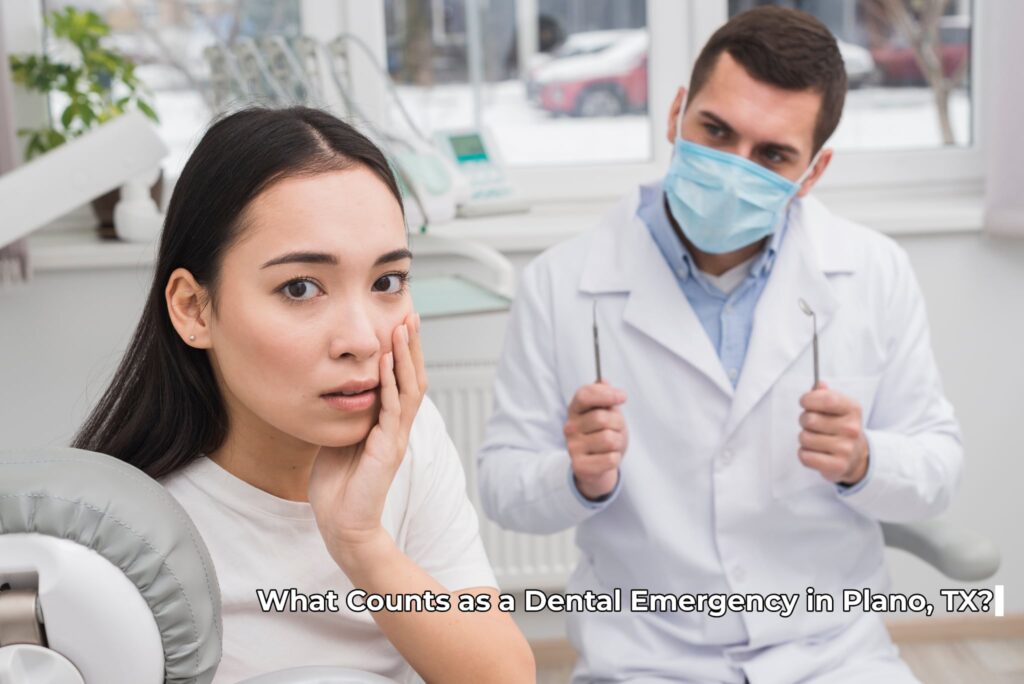
What Counts as a Dental Emergency in Plano, TX?

Dental pain rarely shows up at a convenient time. When it does, most people face the same question right away: is this serious enough to call about today, or can it wait until next week? Getting that wrong has real consequences. An infection that spreads, a crack that grows worse, a tooth that could have been saved with faster action. That is exactly why having a trusted full-service dental clinic in Plano, TX matters, and why knowing when to call an emergency dentist can make the difference between saving a tooth and losing one. 


This guide covers what genuinely counts as a dental emergency, what typically doesn’t require urgent care, and what to do if you find yourself in that situation right now.


Severe Tooth Pain That Won’t Let Up

Pain is one of the most common reasons people call our office outside of regular hours. The challenge is that not all dental pain points to the same level of urgency.

Sensitivity to cold that fades quickly, or minor soreness after eating something hard, can usually wait for a scheduled appointment. Tooth pain that is sharp, throbbing, constant, or that wakes you up at night is a different matter. Pain that spreads into the jaw, ear, or neck, or that gets noticeably worse when you bite down, almost always signals something that needs same-day attention.

That kind of persistent pain usually means one of three things: decay has reached the nerve, a crack has exposed the inner tooth structure, or an infection is beginning to form. None of these resolve without treatment. Catching them early gives you more options and makes treatment more straightforward.


A Broken, Chipped, or Knocked-Out Tooth

A small chip at the edge of a tooth with no pain and no rough edge that bothers your tongue or cheek can generally wait for a regular appointment. Anything beyond that warrants a same-day call.

When a break exposes the inner layer of the tooth, causes sharp pain, or leaves a jagged edge cutting the inside of your mouth, that needs to be seen today. A large fracture affecting the structural stability of the tooth even more so.

Of all the urgent dental situations we handle, a knocked-out tooth is the most time-sensitive. Pick the tooth up by the crown, not the root. Rinse it gently with water. Place it back in the socket if you can, and hold it there. If that’s not possible, put it in a small container of milk and get to us right away. Every minute matters with a knocked-out tooth, and the realistic window for saving it is about 30 minutes.


A Lost Crown or Filling

When a crown or filling comes off, the tooth underneath loses the protection it depends on. That leaves it exposed to bacteria, temperature extremes, and pressure it isn’t built to handle without support. Some patients feel sharp sensitivity right away. Others notice nothing at first, but the tooth is still at risk of rapid damage the longer it stays unprotected.

If your crown comes off, try to find it and keep it safe. Give us a call so we can assess the situation and replace the restoration the same day. Avoid eating on that side of your mouth until the tooth has been seen.


Swelling, Abscess, or Signs of Infection

Visible swelling in the jaw, gum, or cheek paired with tooth pain is a warning sign that needs urgent attention. When that swelling is accompanied by fever, a persistent bad taste in the mouth, or a raised bump on the gum line that looks like a small pimple, those are signs of a dental abscess or spreading infection.

Dental infections do not stay localized. They can travel into the jaw, neck, and surrounding tissue if left untreated. If you are experiencing facial swelling together with a fever, or if you have any difficulty swallowing or breathing, go directly to an emergency room. Call us for anything short of that.


Soft Tissue Injuries Around the Mouth

Cuts, lacerations, or significant bleeding in the lips, tongue, cheeks, or gum tissue after an injury need clinical evaluation. Apply firm, steady pressure with a clean cloth. If the bleeding doesn’t slow meaningfully after 10 to 15 minutes, that’s a clear reason to seek care immediately. Injuries in this area can sometimes involve underlying teeth or jaw structures that aren’t immediately visible.


What Probably Doesn’t Need an Emergency Visit

Not every dental problem is urgent. Minor tooth sensitivity that comes and goes, a tiny chip with no pain and no sharp edge, and mild gum irritation that settles down within a day or two can typically wait for a scheduled visit.

That said, if you aren’t sure, just call us. We’d far rather give you reassurance over the phone than have you wait on something that genuinely needed same-day care.


What to Do When a Dental Emergency Happens

Regardless of what the specific problem is, the approach is the same. Stay as calm as you can and call us to describe your symptoms. We triage emergency situations daily and will get you in the same day when the situation calls for it.

Over-the-counter pain relief taken as directed is appropriate while you wait. Avoid placing aspirin directly against the gum or tooth tissue, as it can cause additional irritation to the area. With a knocked-out tooth, move quickly and get to us within 30 to 60 minutes if at all possible.


Same-Day Emergency Dental Care at Our Practice

We provide same-day emergency dental care at our Plano office, and Dr. Hardin handles every emergency visit personally. There are no on-call associates, and no patients get handed to whoever happens to be available. You’ll see the same doctor for a dental emergency that you see for your regular checkup.

Emergency services at our practice include care for severe tooth pain, broken and knocked-out teeth, lost crowns, abscesses, tooth extractions, and root canal therapy when the situation requires it. For patients who experience significant anxiety, nitrous oxide and oral conscious sedation are available for emergency procedures as well.

If cost is a concern, most PPO and DPO insurance plans are accepted, and we file claims on your behalf. Our in-house membership plan is $36 per month per person and covers two exams, two cleanings, and two sets of X-rays each year, plus 15% off other services, with no waiting period and no deductible. CareCredit, Cherry, and Lending Club financing are also available for larger treatment needs.


Frequently Asked Questions About Dental Emergencies in Plano


Do you offer same-day emergency dental care?

Yes. We provide same-day emergency care for patients with acute tooth pain, a broken or knocked-out tooth, a lost crown, or signs of infection. Emergency services include tooth extractions and root canal therapy when needed.


What should I do if I have a severe toothache?

Call us as soon as possible. Severe or persistent tooth pain can indicate infection, a cracked tooth, or nerve damage. All of these require clinical evaluation before the cause can be identified and treated. Do not wait to see if the pain resolves on its own. Same-day appointments are available for acute pain.


Do you offer sedation for patients with dental anxiety?

Yes. Two options are available at our practice: nitrous oxide and oral conscious sedation. Nitrous oxide is inhaled through a small mask during the procedure and wears off quickly. Patients can drive themselves home afterward. Oral conscious sedation involves taking a prescribed pill before the appointment for deeper relaxation and requires a driver. Both are available across a range of procedures for patients who need them.


Will I see the same dentist for an emergency visit?

Yes. Dr. Hardin is the only treating dentist at our practice. There are no associate doctors or rotating staff. Every patient, whether coming in for a cleaning, a crown, an implant consultation, or an emergency visit, is seen by Dr. Hardin directly.


Contact Us

We’re here to help you achieve a healthy, confident smile. Whether you’re scheduling your first visit or have questions about our services, our friendly team is here to assist you.


Our Office: 1820 Coit Road, Suite 145, Plano, TX 75075
Call Us: (972) 964-8989
Email Us: staff@wpvdental.com
Office Hours:

  • Monday: 8:00 am – 5:00 pm
  • Tuesday: 8:00 am – 2:00 pm
  • Wednesday: 8:00 am – 5:00 pm
  • Thursday: 9:00 am – 6:00 pm
  • Friday: Closed
  • Saturday: 8:00 am – 1:00 pm
  • Sunday: Closed


Schedule your appointment easily through our online booking system.


Related Topics:

Cosmetic Dentistry in Plano TX: Veneers, Whitening and More

June 3, 2026

Improving the appearance of your smile does not require major surgery or a complicated multi-year process. For most patients, what it takes is an honest picture of the available options, a clear conversation about what fits their dental health, and a provider who explains costs upfront. As a top cosmetic dental clinic in Plano, TX, Westpark Village Dental Care offers a full range of services for expert smile enhancement, including porcelain veneers, professional teeth whitening, and clear aligners, all handled in-house by Dr. Jordan Hardin, DDS. 


What Cosmetic Dentistry Can Actually Do

Cosmetic dentistry covers any dental treatment that improves the way your teeth look. That includes changes to color, shape, size, spacing, and alignment. Some treatments are purely aesthetic. Others, like veneers or clear aligners, also address functional concerns such as chips, worn edges, or crowding that affects how well you can clean your teeth.

Not every cosmetic concern requires the same solution. A patient bothered by minor discoloration has different options than someone dealing with cracked teeth, uneven edges, or significant spacing issues. We take time at every consultation to understand what is actually bothering you before recommending anything. You can learn more about Dr. Hardin’s training and approach to understand what guides those recommendations.


Porcelain Veneers

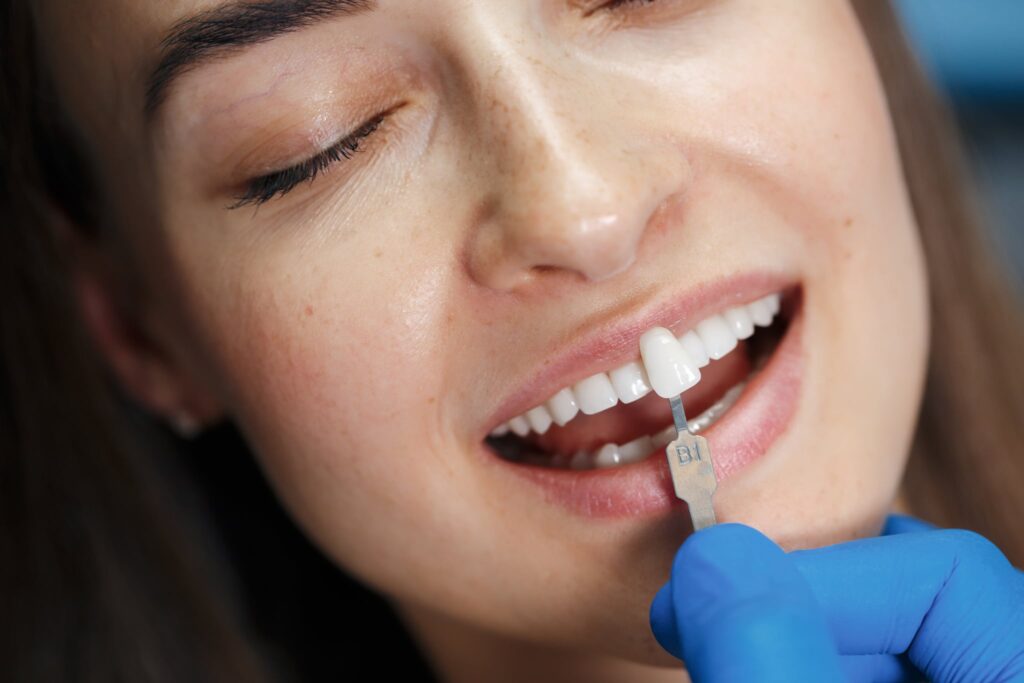
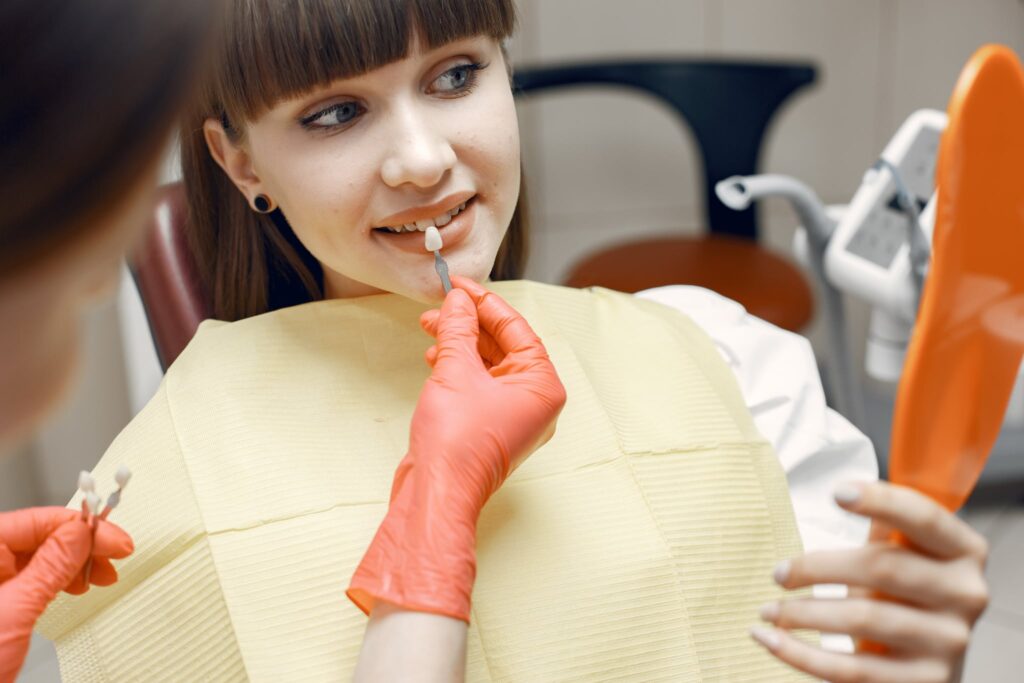
Porcelain veneers are thin ceramic shells bonded to the front surface of the teeth. They can change the color, shape, or size of a tooth and cover chips, cracks, staining that does not respond to whitening, minor gaps, and teeth that are worn down or uneven. A full set of veneers can dramatically change the entire appearance of a smile in a way that most other treatments cannot match on their own.

The process involves two appointments. At the first, a small layer of enamel is removed to make room for the veneer, and an impression is sent to a dental lab. At the second, the custom veneer is bonded to the tooth. Because enamel removal is required, the decision to get veneers is permanent. Your tooth will always need some form of coverage after that point. Porcelain veneers typically last 10 to 15 years or longer with proper care.

If you want to explore whether porcelain veneers are the right fit for your smile goals, a consultation is the best starting point. Dr. Hardin reviews your dental health, discusses your goals, and gives you a clear picture of what the outcome would realistically look like.


Professional Teeth Whitening

Professional teeth whitening is a fast, non-invasive option for patients whose primary concern is tooth color. The professional-grade whitening gel we use in-office has a significantly higher concentration than anything available over the counter, which means results that would take weeks with a drugstore kit can often be achieved in a single appointment.

Before recommending whitening, we check for issues that could affect the treatment or outcome, including sensitivity, existing restorations, and gum health. Whitening does not change the color of crowns, veneers, or fillings, so patients with visible restorations should know that only the natural teeth around them will respond to treatment. For patients who are good candidates, in-office whitening is one of the most efficient cosmetic options available.

We also offer take-home options for patients who prefer a more gradual approach or want to maintain results after an in-office session. Full details are on our teeth whitening page.


Clear Aligners for a Straighter Smile

Crooked, crowded, or spaced teeth affect more than appearance. Misalignment can make proper brushing and flossing harder, contribute to uneven wear, and affect bite function over time. Clear aligners correct these issues using a series of custom-made removable trays worn over the teeth, gradually shifting them into the desired position without brackets or wires.

Dr. Hardin is a member of the American Academy of Clear Aligners, a professional association focused on standards and ongoing education in aligner-based care. We offer clear aligner treatment in-house, meaning no referral to a separate specialist and consistent care from the same provider throughout the process. New patients currently receive $1,000 off clear aligner treatment.

Full details on the treatment process, how long it takes, and who is a good candidate are on our orthodontics page.


Who Is a Good Candidate for Cosmetic Work?

Most adults with healthy teeth and gums are candidates for at least one type of cosmetic treatment. The key condition is a healthy foundation. Active decay, gum disease, or bone loss needs to be addressed before any cosmetic work begins. Cosmetic treatment built on an unhealthy foundation does not last, and it may mask problems that continue to worsen without attention.

A pre-treatment evaluation is part of the process at our office. We look at the overall condition of your teeth and gums, talk through your goals, and explain what each relevant option actually involves before anything is scheduled. There is no pressure to commit at a first appointment. That visit exists to give you enough information to make a decision you feel confident about.


How We Make Cosmetic Care Affordable

Most dental insurance plans classify cosmetic dentistry as elective and do not cover it. That said, it does not have to be out of reach. We offer four ways to pay: dental insurance for any portion that may apply, our in-house Membership Plan that gives patients 15 percent off all services for $36 a month, third-party financing through CareCredit, Cherry, and Lending Club, and direct in-house financing through our practice.

If a full smile makeover is the goal but the budget needs to be phased, we can build a plan that works in stages. All fees are discussed before any treatment begins. There are no hidden charges.


Related Topics:

Teeth Whitening Options in Plano TX: In-Office vs At-Home

Not every whitening option delivers the same result, and not every patient needs the same approach. Getting quality dental care means finding a treatment that actually fits the person sitting in the chair, whether that is the fastest possible change before a big event, a gradual lift someone can work through on their own schedule, or a simple touch up on results already achieved. Working with a reputable dental clinic helps you weigh the right path based on your goals, the current shade and condition of your teeth, and any oral health factors that should be addressed first.

At Westpark Village Dental Care in Plano, TX, we offer professional in-office whitening as part of our cosmetic dental services. We also walk patients through all their options before recommending any specific path.


What In-Office Whitening Involves

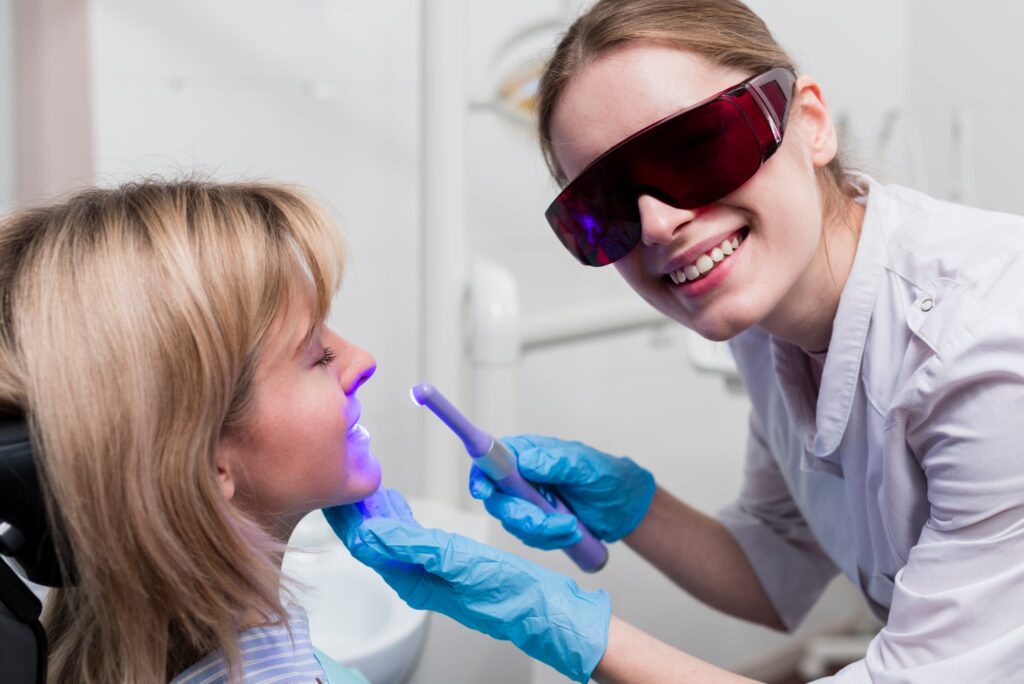
In-office teeth whitening is performed at our dental office in a single appointment that typically takes about an hour. We start by applying a protective barrier to the gums, then apply a professional-grade peroxide gel to the teeth. The concentration of the whitening agent is significantly higher than what is available in any store-bought product, which is why the results are faster and more significant.

Patients who choose in-office whitening see a visible difference after one session. For anyone with a specific timeline or who wants the most noticeable result in the least amount of time, in-office treatment is the more direct path. It is also the option that involves the most oversight, since we evaluate your dental health beforehand and monitor the entire process. Results from in-office whitening typically last six months to two years, depending on diet, habits, and how well you maintain your teeth between visits.


What At-Home Whitening Involves

At-home whitening comes in two forms: products dispensed by a dentist and products purchased over the counter without any professional involvement. Understanding the difference between these matters before deciding which route to take.

Dentist-dispensed take-home kits include custom-fitted trays made from an impression of your teeth, paired with a whitening gel that has a higher concentration than anything sold at a pharmacy. Patients wear the trays for a prescribed amount of time each day, typically over one to two weeks. The process is more gradual than in-office treatment but can produce comparable results when followed consistently.

Over-the-counter products, including strips, pre-formed trays, and paint-on gels, use much lower concentrations of the active ingredient. They can produce modest improvements for patients whose teeth are already in a lighter range and are useful for maintenance after professional whitening. As a primary whitening method, they are generally less effective than professionally supervised options.


How the Results Compare

In-office whitening produces the fastest and most noticeable results. Dentist-dispensed take-home kits can match those results over a longer period with consistent use. Over-the-counter products produce more limited results and vary considerably by brand, formula, and the individual’s starting shade.

The longevity of any whitening result has more to do with habits than with the method used. Coffee, tea, red wine, tobacco, and dark sauces accelerate re-staining. Patients who attend regular dental cleanings and are mindful of staining foods tend to hold their results longer, regardless of which whitening method they started with.


Who Should See a Dentist Before Starting Any Whitening

Anyone with tooth sensitivity, gum recession, exposed root surfaces, untreated decay, or visible dental restorations should speak with a dentist before beginning any whitening treatment. Whitening agents do not change the color of crowns, veneers, fillings, or bonding, and applying the gel to compromised gum tissue can cause significant discomfort.

We evaluate every patient’s dental health before recommending whitening. If whitening is not appropriate for where your teeth are right now, we tell you that directly and explain what to address first. If it is a good fit, we walk you through what the process looks like and what results are realistic based on the current condition of your teeth.


Combining Whitening with Other Cosmetic Treatments

Whitening is often one part of a broader cosmetic plan. Patients pursuing porcelain veneers, for example, should whiten first if they want the veneers shade-matched to a brighter color. Veneers do not respond to whitening agents after they are placed, so the order of treatments matters when both are on the table.

Similarly, patients who want clear aligners to correct spacing or crowding may prefer to whiten after treatment is complete, once the teeth are in their final position. If you have more than one cosmetic goal in mind, we can help you think through the right sequence so each treatment builds on the last.


Which Option Is Right for You?

If speed matters most, in-office whitening is the better choice. If you prefer to whiten on your own schedule over a couple of weeks, a dentist-dispensed take-home kit may be a better fit. If your goal is light maintenance after professional whitening, an over-the-counter product is a reasonable option. If you have any dental health concerns or visible restorations, start with a consultation before trying any whitening product.


Related Topics:

What Are Dental Veneers? Materials, Costs, and Lifespan

Dental veneers are one of the most effective professional dental solutions for changing the way your teeth look, which is why many people sit down with a cosmetic dentist before committing to them. A single veneer can cover a chip, reshape an uneven tooth, or fix a stain that whitening cannot reach. A full set can change the entire appearance of a smile. Since veneers involve permanently altering the natural tooth surface, they are also one of the bigger cosmetic decisions a patient will make.

Knowing what veneers are made of, how long they last, how the process works, and what they cost helps you walk into a consultation with the right questions and a clear sense of what to expect.


What Dental Veneers Are and How They Work

A dental veneer is a thin shell bonded to the front surface of a tooth. It covers whatever is visible when you smile, which means it can address discoloration, shape irregularities, chips, cracks, minor gaps, and teeth that appear too small or uneven. Veneers are a front-facing restoration. They do not change the biting surface or the back of the tooth.

Placing a veneer requires removing a small amount of enamel from the tooth surface to create room for the shell to sit flush and bond securely. Because enamel does not grow back, getting veneers is a permanent decision. Your tooth will always require a veneer or some form of restoration after the enamel is prepared. This is worth knowing clearly before agreeing to treatment, and it is something we explain thoroughly before any work begins.

At Westpark Village Dental Care, Dr. Jordan Hardin, DDS evaluates your oral health and discusses your goals before recommending veneers. You can learn more about his approach through our cosmetic dentistry page.


What Materials Are Dental Veneers Made Of?

The two most common veneer materials are porcelain and composite resin. Each has distinct characteristics that make it a better fit for different patients and goals.

Porcelain is the more widely used option for long-term veneers. It is durable, stain-resistant, and reflects light in a way that closely resembles natural tooth enamel, making the result look convincingly real. Porcelain veneers are made in a dental lab from an impression of your teeth, which means the process takes at least two appointments. The first visit involves preparing the tooth and taking the impression. The second is when the finished veneer is bonded in place.

Composite resin veneers can sometimes be completed in a single appointment. The composite material is applied directly to the tooth and shaped chair-side by the dentist. They are generally less expensive than porcelain but also less durable and more prone to staining over time. Composite veneers can be a reasonable option for patients who want a faster result, are not yet ready to commit to porcelain, or want to preview the change before making a more permanent decision.


How Long Do Dental Veneers Last?

Porcelain veneers typically last 10 to 15 years, and often longer with proper care. Composite resin veneers generally last 5 to 7 years before they may need to be repaired or replaced.

Several factors determine how long veneers hold up in practice. Teeth grinding puts significant stress on the bonding and the veneer itself. Patients who grind are good candidates for a nightguard to protect their investment. Biting into hard objects like ice, hard candy, or bottle caps can chip or crack the shell. Habits like nail biting or using your teeth as tools work against the longevity of the restoration.

Patients who attend regular dental checkups and cleanings, wear a nightguard if indicated, and avoid habits that stress the teeth tend to get the most years out of their veneers.


How Much Do Dental Veneers Cost?

The cost of veneers depends on the material used, how many teeth are being treated, and the complexity of the case. Porcelain veneers cost more than composite because of the lab fabrication involved. A single veneer costs considerably less than a full set treating the entire visible smile.

We discuss all costs before any treatment is scheduled. There are no hidden charges. For patients who need help managing the cost, we offer third-party financing through CareCredit, Cherry, and Lending Club, as well as direct in-house financing through our practice. Patients enrolled in our in-house Membership Plan receive 15 percent off all services, which includes cosmetic work.

Most dental insurance plans classify veneers as elective and do not cover them. If insurance is a factor, we can review what your specific plan covers during the consultation so there are no surprises.


How to Know If Veneers Are Right for You

Veneers are a strong option for patients who want lasting improvement to the appearance of their teeth and whose underlying dental health is in good shape. They are not the right fit for patients with active gum disease, significant decay, or substantial structural damage, where a crown would be a more appropriate choice. Patients with severe grinding habits may also need to address that issue before or alongside any veneer treatment.

The most direct way to find out whether veneers fit your situation is a consultation. Dr. Hardin looks at your teeth, talks through your goals, and explains what is realistic given your dental history before anything is decided. If veneers are not the right fit, he will tell you that and walk you through what alternatives make more sense for your specific case.


Related Topics:

Invisalign vs Braces in Plano TX: Which Is Better?

Straightening teeth used to mean one option: traditional metal braces worn for one to three years. That is no longer the case. Clear aligners have become a popular alternative for adults and teens who want to correct alignment problems without the look and upkeep demands of brackets and wires. At our modern dental clinic in Plano, TX, we offer advanced dental treatments that include both methods, and both approaches work. Which one works better depends on the specific teeth being corrected, the patient’s lifestyle, and the goals of treatment.

At Westpark Village Dental Care in Plano, TX, Dr. Jordan Hardin, DDS, offers clear aligner treatment in-house. He is a member of the American Academy of Clear Aligners, a professional association dedicated to standards and education in aligner-based orthodontic care.


How Clear Aligners Work

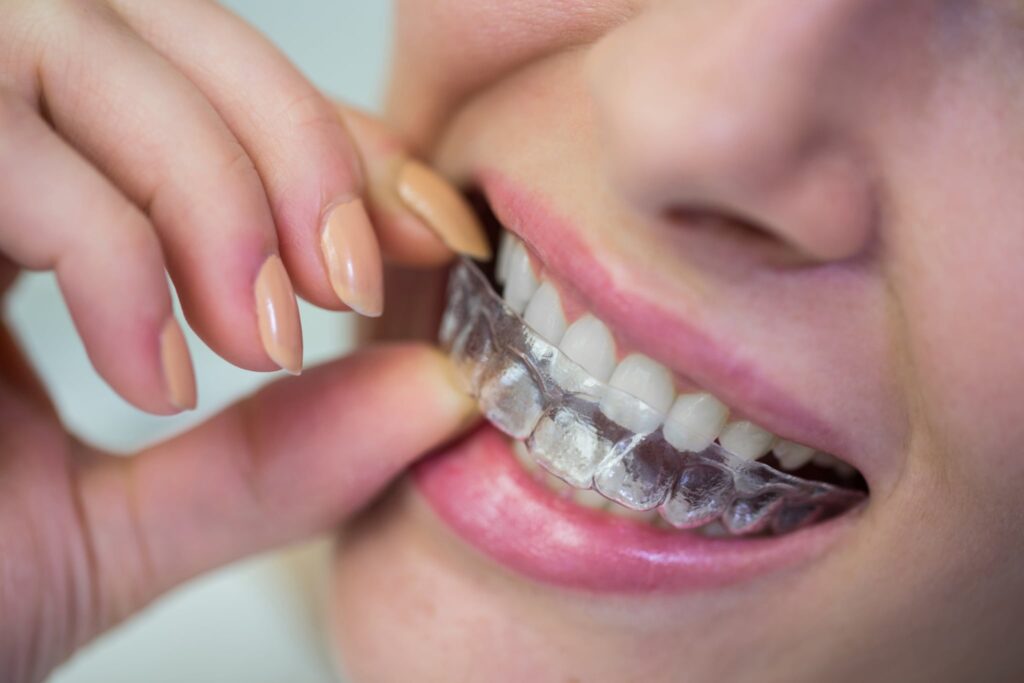
Clear aligners are a series of custom-made removable plastic trays worn over the teeth. Each tray is slightly different from the last, applying gentle, controlled pressure to move the teeth gradually toward the desired position. Patients switch to a new tray on a prescribed schedule, typically every one to two weeks, until the treatment plan is complete.

Because the trays are removable, patients take them out to eat, drink anything other than water, and clean their teeth. They need to be worn for 20 to 22 hours per day to stay on schedule. Falling significantly short of that wear time slows down treatment or produces results that fall short of the original plan.

Treatment length varies depending on the complexity of the case. Many adults complete clear aligner treatment in 12 to 18 months. Invisalign is the most widely recognized brand of clear aligners. Our office offers clear aligner treatment that follows the same principle: custom trays, planned tooth movement, and a defined endpoint. Full details on what our treatment involves are on our orthodontics page.


How Traditional Braces Work

Traditional braces use metal brackets bonded to the tooth surface, connected by a wire that the dentist adjusts periodically. Each adjustment applies controlled pressure that moves the teeth in planned increments. Unlike aligners, braces are fixed and cannot be removed by the patient during treatment.

Because they are permanently in contact with the teeth throughout the process, braces work continuously without depending on the patient to follow a wear schedule. This is a meaningful advantage for patients who might struggle to keep removable trays in for the required hours each day. Braces are also better suited for certain complex bite corrections that clear aligners cannot address as effectively.

Treatment time with traditional braces typically ranges from 18 months to three years, depending on the complexity of the correction needed.


Comfort and Daily Experience

Most patients find clear aligners more comfortable than braces. The smooth plastic trays do not have brackets or wires that can irritate the inside of the cheeks and gums. There are no emergency appointments for a broken bracket or a poking wire. Eating has no restrictions since the trays come out at mealtimes, so nothing is off the menu during treatment.

The tradeoff is discipline. Clear aligners only work when they are being worn. Patients who remove them too often or forget to switch to the next tray on schedule slow their own progress down without realizing it at first.

Braces require more dietary adjustment. Hard, sticky, and crunchy foods can damage brackets and wires. Cleaning around the hardware is more involved than brushing and flossing without it. Most patients experience some soreness after adjustments, particularly in the first few days of wearing a new wire configuration.


Which Option Works Better for Different Cases?

Clear aligners are well-suited for mild to moderate alignment concerns including crowding, spacing, and some bite corrections. They are a strong choice for adult patients who want discreet treatment and can commit to the required daily wear time.

Traditional braces are generally more appropriate for complex corrections, including significant bite misalignment, severe crowding, or cases where precise tooth rotation or vertical movement is needed. For younger patients who may not reliably wear removable trays for the required hours, braces remove that variable from the equation entirely.

There is no universal answer about which option is better. The right choice depends on your specific teeth, your lifestyle, and your treatment goals. Dr. Hardin reviews each case and explains honestly which path is likely to produce the best outcome before any commitment is made.


Cost of Clear Aligners vs Braces in Plano TX

The cost gap between clear aligners and traditional braces is smaller than most patients expect. Both options fall in a similar range for straightforward cases, with more complex cases costing more regardless of which method is used. The final number depends on the complexity of the correction, the length of treatment, and whether refinement trays are needed at the end of aligner treatment.

We currently offer $1,000 off clear aligner treatment for new patients. We also offer four ways to manage the cost: dental insurance where applicable, our in-house Membership Plan that gives patients 15 percent off all services for $36 a month, third-party financing through CareCredit, Cherry, and Lending Club, and direct in-house financing through our practice. All fees are discussed before any treatment begins.


What a Consultation Looks Like

An orthodontic consultation at our office starts with a review of your teeth and bite. We take any necessary imaging, discuss what is happening with your alignment, and explain which treatment options are appropriate for your case and why. If clear aligners are a fit, we walk through what the treatment involves, how long it is likely to take, and what it will cost.

There is no pressure to make a decision at the first appointment. The goal of that visit is to give you a complete picture of your options so you can choose what makes sense for your teeth and your life. New patients can take advantage of our current $1,000 off clear aligner offer when they are ready to move forward.


Related Topics:

Is Teeth Whitening Safe at Dental Clinics in Plano, TX?

Professional teeth whitening ranks among the most requested cosmetic treatments at any top-rated dental clinic in Plano, TX, and it is also one of the most misunderstood. Patients often ask whether the procedure is safe, whether it works on their type of staining, and how in-office results compare with what a drugstore kit produces. The short answer is that in-office whitening is safe for most healthy adults with natural teeth. The longer answer depends on your oral health, the strength of the whitening agent, and the preparation and aftercare suited to your teeth, which is why patients tend to trust a practice known for the best dental care over a one-size-fits-all kit. 


What Is Professional Teeth Whitening?

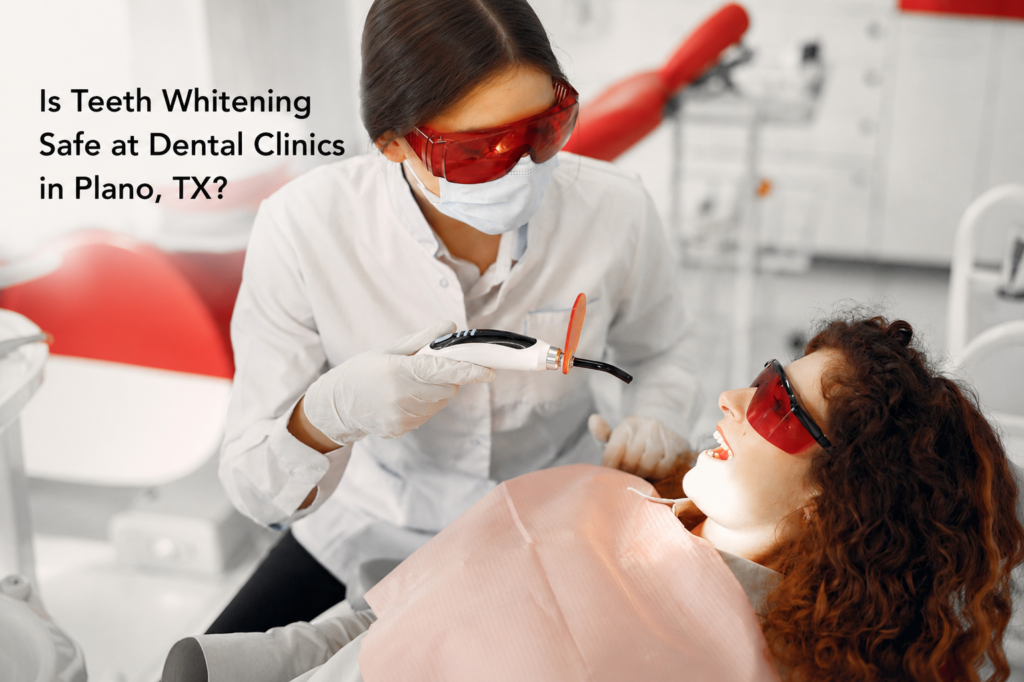
Professional teeth whitening uses a peroxide-based gel applied directly to the tooth surface. The concentration of the active ingredient is higher than anything available over the counter, which is why in-office results are faster and more noticeable than what most at-home products can produce. A trained dentist evaluates your teeth beforehand, protects the gum tissue before applying the gel, and monitors the process throughout.

At our Plano office, teeth whitening is one of several cosmetic dental services we offer for patients who want to improve their smile without major treatment. It is a relatively straightforward procedure for the right candidate, and a consultation tells us quickly whether you are one.


How Is Clinic Whitening Different from Store-Bought Kits?

The main difference is concentration. Over-the-counter products, including strips, trays, and paint-on gels, typically contain 3 to 10 percent hydrogen peroxide or carbamide peroxide. Professional in-office treatments use concentrations that can reach 25 to 40 percent. That gap is why a single appointment can produce results that take weeks to achieve at home, if they are achievable at all with a consumer product.

The other difference is supervision and preparation. When whitening is done at a dental office, the dentist examines the teeth for existing sensitivity, decay, or restorations that could affect the outcome or cause discomfort. The gums are covered with a protective barrier before the gel goes on. The treatment is timed and monitored. None of that happens when a patient uses a drugstore kit on their own.


Is Teeth Whitening Safe for Everyone?

For most healthy adults with natural teeth, yes. For some patients, it is not the right choice, at least not without addressing other issues first. Teeth whitening is not recommended for patients with untreated tooth decay, active gum disease, severe gum recession, or exposed root surfaces. It is also not recommended for pregnant patients or children under 16.

Patients with crowns, bridges, veneers, or tooth-colored fillings should know that whitening agents do not change the color of dental materials. Only natural enamel responds to peroxide-based whitening. If you have restorations in visible areas, the natural teeth around them may lighten while the restorations stay the same shade, creating an uneven result. We discuss this before recommending treatment.


What Are the Most Common Side Effects?

Temporary tooth sensitivity is the most common side effect. It typically occurs during or shortly after treatment and resolves for most patients within 24 to 48 hours. Some patients experience mild gum irritation if the whitening gel contacts soft tissue, though the protective barrier applied before treatment minimizes this significantly.

Serious side effects from professionally supervised whitening are rare. The risks go up considerably when patients use high-concentration products at home without any dental evaluation, which is one reason professional oversight matters. The American Dental Association recommends that patients have a dentist examine their oral health before starting any whitening treatment.


What Does the Whitening Process Look Like at Our Office?

We start with a review of your dental health to confirm whitening is appropriate for you. If your teeth and gums are in good shape and there are no contraindications, the in-office treatment typically takes about an hour. We apply the protective barrier to the gums, apply the whitening gel to the teeth in timed intervals, and monitor the process from start to finish.

Results vary based on the original shade of the teeth, the nature of the staining, and the individual’s enamel. Most patients see a noticeable improvement after a single appointment. We can also discuss take-home options if you want to maintain or extend your results after an in-office session. Our full range of cosmetic treatments is available for patients who have broader smile goals beyond whitening alone.


How Long Do Whitening Results Last?

Results from professional whitening typically last between six months and two years, depending on your diet, habits, and how well you maintain your teeth between visits. Foods and drinks that stain, including coffee, tea, red wine, and dark sauces, accelerate re-staining. Tobacco use shortens results significantly. Patients who attend regular dental cleanings tend to hold their results longer.

If you are considering whitening alongside other cosmetic work, such as porcelain veneers, the sequencing matters. Veneers are shade-matched at the time they are placed, so whitening should happen before placement if both are part of the plan.


Frequently Asked Questions About Teeth Whitening

The questions below reflect what patients ask us most often before booking a whitening appointment. The answers reflect how we evaluate each case and what our approach looks like at our Plano office.


Is teeth whitening safe for sensitive teeth? It can be, depending on the cause and severity of the sensitivity. We evaluate every patient before recommending whitening. If sensitivity is present, we may suggest a lower concentration formula, a desensitizing treatment beforehand, or a different approach entirely. The goal is a result you are comfortable with, not just a fast one.


How much does professional teeth whitening cost in Plano, TX? The cost varies depending on the type of treatment and how many sessions are involved. We provide fee information before any treatment begins so there are no surprises. Patients enrolled in our in-house Membership Plan receive 15 percent off all services, which applies to whitening as well.


Will whitening work on crowns or veneers? No. Whitening agents do not affect the color of crowns, veneers, dental bonding, or fillings. Only natural tooth enamel responds to peroxide-based whitening. If you have restorations you want to match to a lighter shade, that requires replacing the restorations, not whitening them.


Can I whiten my teeth if I have gum disease? No. Active gum disease should be treated before any whitening treatment. Applying whitening gel to inflamed or compromised gum tissue causes significant irritation. We screen for gum health as part of the evaluation before recommending any cosmetic treatment.


Contact Us


We’re here to help you achieve a healthy, confident smile. Whether you’re scheduling your first visit or have questions about our services, our friendly team is here to assist you.

Our Office: 1820 Coit Road, Suite 145, Plano, TX 75075
Call Us: (972) 964-8989
Email Us: staff@wpvdental.com
Office Hours:

  • Monday: 8:00 am – 5:00 pm
  • Tuesday: 8:00 am – 2:00 pm
  • Wednesday: 8:00 am – 5:00 pm
  • Thursday: 9:00 am – 6:00 pm
  • Friday: Closed
  • Saturday: 8:00 am – 1:00 pm
  • Sunday: Closed

Schedule your appointment easily through our online booking system.


Related Topics: