
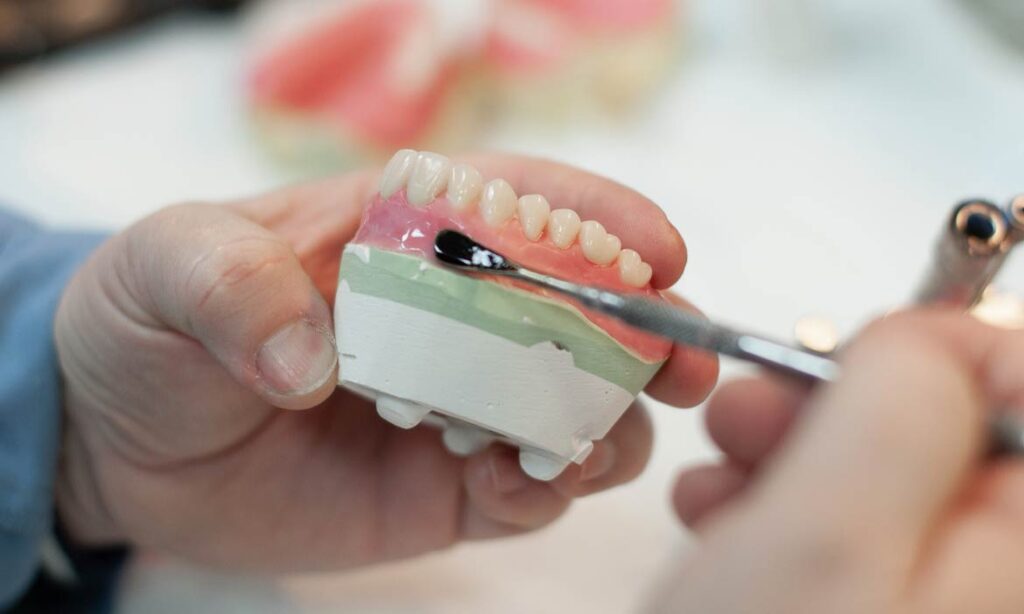
If you’ve ever wondered what goes into making dentures, you’re not alone. Many people are curious about the materials used to make these tooth replacements. Your local dental clinic can explain the options available based on your needs and budget. From acrylic resin to porcelain to metal alloys, each material serves a specific purpose. This guide breaks down the most common denture materials, so you know exactly what you’re getting.
Acrylic Resin
Acrylic resin is one of the most common materials used to make dentures. It’s durable, lightweight, and can be shaped to fit your mouth perfectly. The material provides a sturdy base while still allowing for adjustments down the line. Dentists like it because it holds up well against daily wear and tear. If your dentures ever need tweaking, acrylic resin makes that process pretty straightforward.
Porcelain
Porcelain gives dentures a natural, tooth-like appearance that’s hard to beat. It’s made by heating kaolin, feldspar, and quartz to high temperatures. The result is a finish that mimics the way real teeth reflect light. Porcelain resists staining well, so your dentures keep their color longer. The downside? It can chip or crack if you drop it or bite down on something too hard. That’s why porcelain is mainly used for front teeth where looks matter most.
Metal Alloys
Metal alloys offer strength and durability. These are usually made from a mix of cobalt, chromium, and nickel. The combination resists corrosion and handles the daily stress of chewing without bending or breaking. Metal alloy dentures tend to last longer than other options, and they’re safe for use in your mouth if you want something that will hold up for years. Consider metal alloys.
Flexible Polymer
Flexible polymers have become popular because they’re more comfortable than rigid materials. Thermoplastics like polyethylene or nylon bend slightly, which means they distribute pressure more evenly when you chew or talk. This reduces sore spots and irritation. The material also adapts to your gums better, giving you a snugger fit. Bonus: flexible polymers can look a lot like natural gum tissue, so your dentures appear more realistic.
Nylon
Nylon is a synthetic material that’s both tough and flexible. Dentures made from nylon are lightweight and resist fractures better than traditional options. The smooth surface means less irritation inside your mouth. If adjustments or repairs are needed, nylon makes that easier. These dentures can also be designed to look like real teeth, giving you a natural smile without the bulk.
Composite Materials
Composite materials blend acrylic resin with fibers like glass or quartz. The acrylic provides a smooth, durable surface while the fibers add extra strength. These dentures are lightweight and comfortable for all-day wear. They blend in well with your gums and resist stains. If you need adjustments later, composites make that easy without much hassle. It’s a solid choice if you want something that looks good and performs well.
Related Topics: