
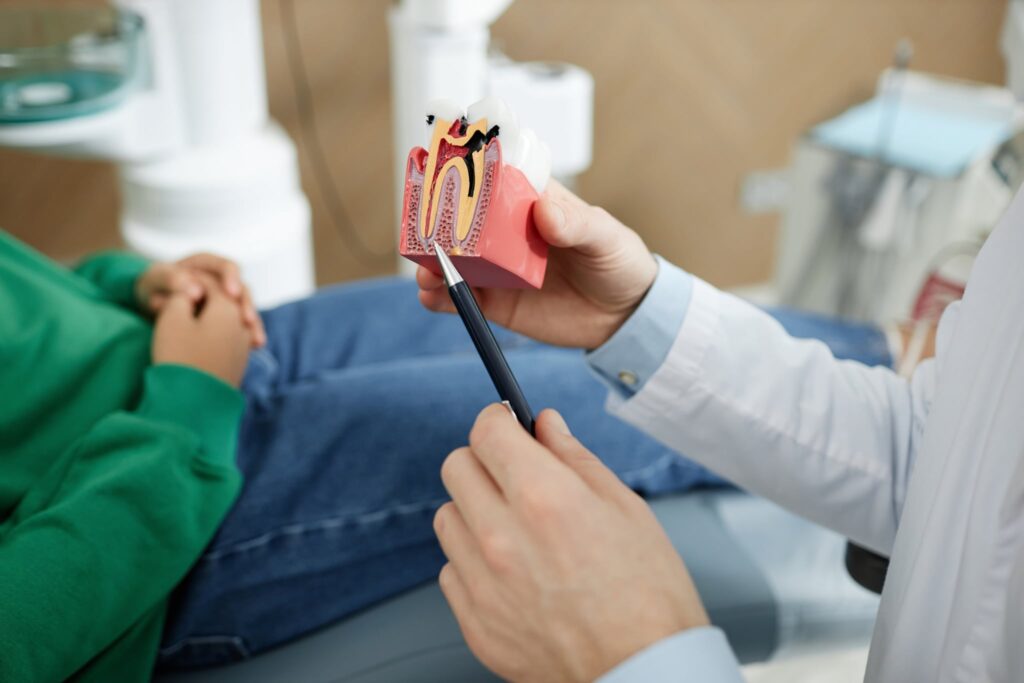
The reputation surrounding root canal treatment has never quite caught up with how the procedure is actually performed today. Ask anyone at a recommended dental clinic and you’ll hear the same reassurance: what most people fear is a version of dentistry that no longer exists. That fear was shaped over decades, tied to cruder tools and rougher techniques. The stories are not fabrications. They are simply outdated.
Today, a root canal is a precise procedure designed to relieve pain, not cause it. Here is exactly what happens at each stage, so you know what to expect if one is recommended for you.
Why a Root Canal Becomes Necessary
A root canal is needed when the soft tissue inside the tooth, known as the pulp, becomes infected or severely damaged. The pulp contains nerves and blood vessels that run from the crown of the tooth down through its roots. When decay goes deep enough, when a crack reaches the inner structure of the tooth, or when an injury affects the tooth internally, that tissue can become infected or begin to die.
Left without treatment, an infected pulp does not heal on its own. The infection spreads into the surrounding bone and tissue, the tooth eventually fails, and the infection can travel well beyond the tooth itself. A root canal removes the damaged tissue, cleans and seals the inside of the tooth, and allows the tooth to stay in place and function normally for years to come.
Diagnosis and Imaging
Before any treatment begins, Dr. Hardin takes X-rays to evaluate the extent of the infection or damage and confirm that a root canal is the right course of action. The digital X-ray system at our practice produces less radiation than traditional film and displays results immediately on screen, which means Dr. Hardin can walk you through exactly what he’s seeing in real time.
In some cases, a CT scan from our cone beam scanner is used to get additional three-dimensional detail, particularly with teeth that have more complex root anatomy. Once the imaging is reviewed and the plan is clear, Dr. Hardin explains the full procedure before anything is done.

Making Sure You’re Comfortable
The most common fear patients bring to a root canal appointment is pain. That’s worth addressing directly. The tooth and surrounding tissue are numbed thoroughly before any work begins. Most patients report feeling nothing more than the initial injection and some mild pressure during the procedure.
For patients who experience significant dental anxiety, nitrous oxide and oral conscious sedation are both available at our practice. These aren’t reserved for complex surgical procedures. If you need additional support to get through a root canal comfortably, we provide it, and that conversation should happen when you call to schedule.
Removing the Infected Tissue
Once the area is fully numb, a small rubber dam is placed around the tooth to keep the field clean and dry during the procedure. A small access opening is then made in the top of the tooth.
Through that opening, Dr. Hardin uses specialized instruments to remove the infected or damaged pulp tissue from the pulp chamber and the canals that run through the tooth’s roots. The canals are then shaped and prepared for the sealing material that comes next. This step is the core of what a root canal involves.
Cleaning, Disinfecting, and Sealing
With the pulp removed, the inside of the tooth and the root canals are cleaned and disinfected thoroughly. Antimicrobial solution flushes the canals before they’re dried and ready to be filled.
The cleaned canals are then filled with a biocompatible material called gutta-percha, which seals the space and prevents bacteria from re-entering. The access opening in the tooth is closed with a temporary or permanent filling depending on what comes next in the treatment plan.
Placing a Crown
In most cases, a tooth that has had a root canal needs a dental crown placed afterward. Teeth with significant decay or structural damage are more vulnerable to fracture following the procedure, and a crown provides the support that allows the tooth to function normally long-term.
We use the Medit i700 digital impression system to plan the fit of each crown, which means no traditional impression trays. The digital scan is faster, more accurate, and far more comfortable for patients who find traditional impressions difficult.
What Recovery Looks Like
Most patients return to their normal routine the same day or the day after the procedure. Some soreness in the area is common for a few days as the surrounding tissue heals. Over-the-counter pain relief is usually all that’s needed.
Dr. Hardin gives clear post-procedure instructions before you leave, including what normal healing looks like and what would be worth a follow-up call. If anything feels off after the appointment, reaching our team directly is straightforward.
For Patients With Dental Anxiety
A significant portion of patients who come to us for root canal therapy have been putting it off for a long time because of anxiety. We see this regularly, and there is nothing unusual about it. Both sedation options are available for root canal procedures at our Plano office.
Related Topics: